Right Hive, Right Place
Top-Bars, Langstroths, and the Best of Both
Over the last 20-ish years, I’ve worked with my fair share of both Langstroth and top-bar hives. I’ve developed a love for top-bars, a need for Langstroths, and a plan for the future that blends the best of both worlds.
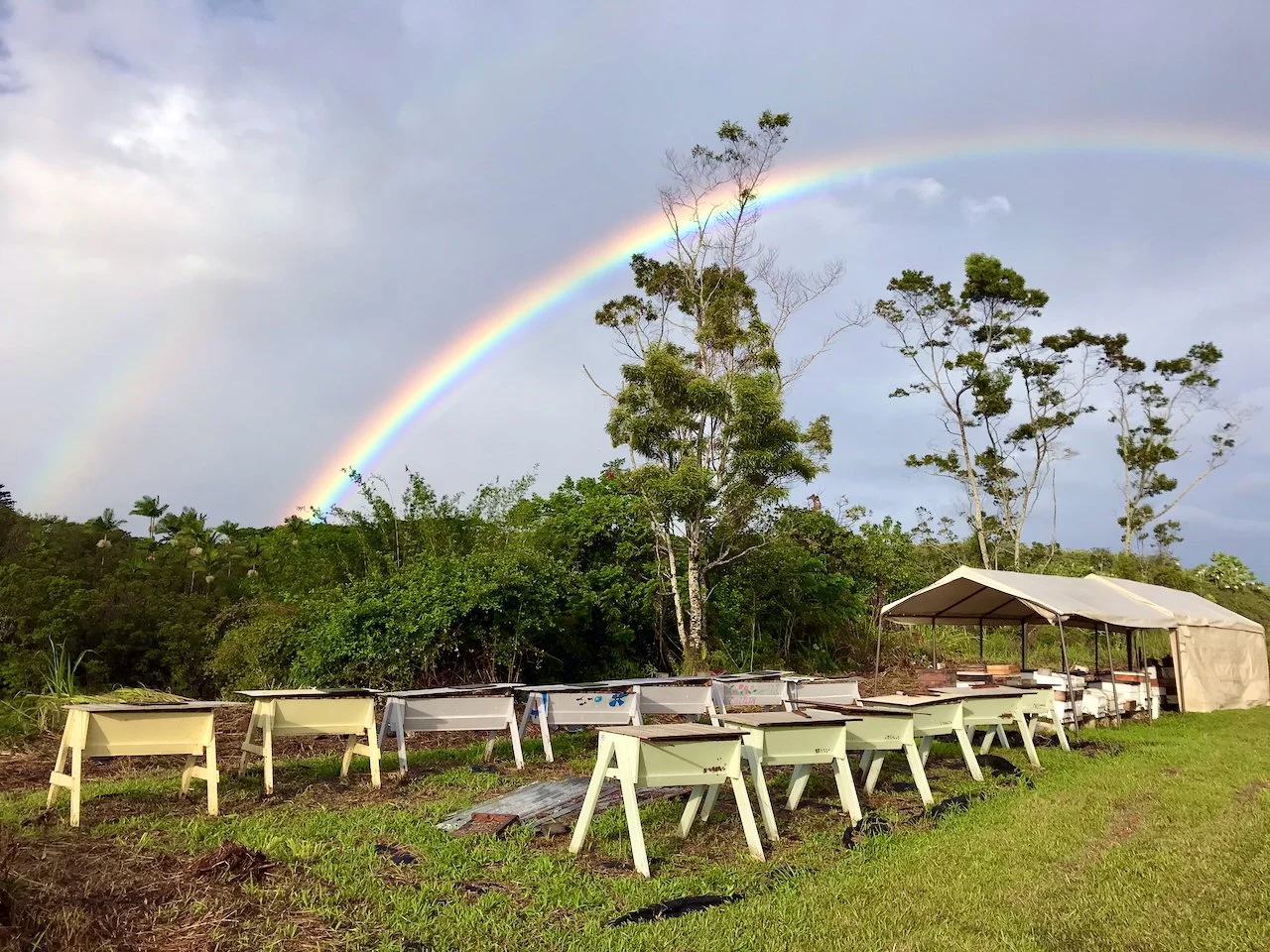
Top-bars in the front, Langstroths in the back.
For those who are totally new to the topic, a very simple starting place:
Langstroth: what you will most likely picture when you imagine a beehive. A rectangular box that holds 10 (sometimes 8) wooden frames filled with comb, often with multiple boxes stacked one on top of the other.
Top-bar: a variation that I was introduced to early in my beekeeping days.Essentially a long empty trough that has wooden slats laid across the top - the bees build their own combs hanging from those slats.
The two styles have a lot of differences in terms of actual hive components, but also management and production.
As my apiary has evolved, I have shifted away from Langs and into the world of top-bars. Beyond a handful of concrete reasons, there’s also a hard-to-explain vibe that I prefer. I simply have more fun working with top-bars. It’s a trade-off, though, at the cost of some efficiency and production value that the Langs offer.
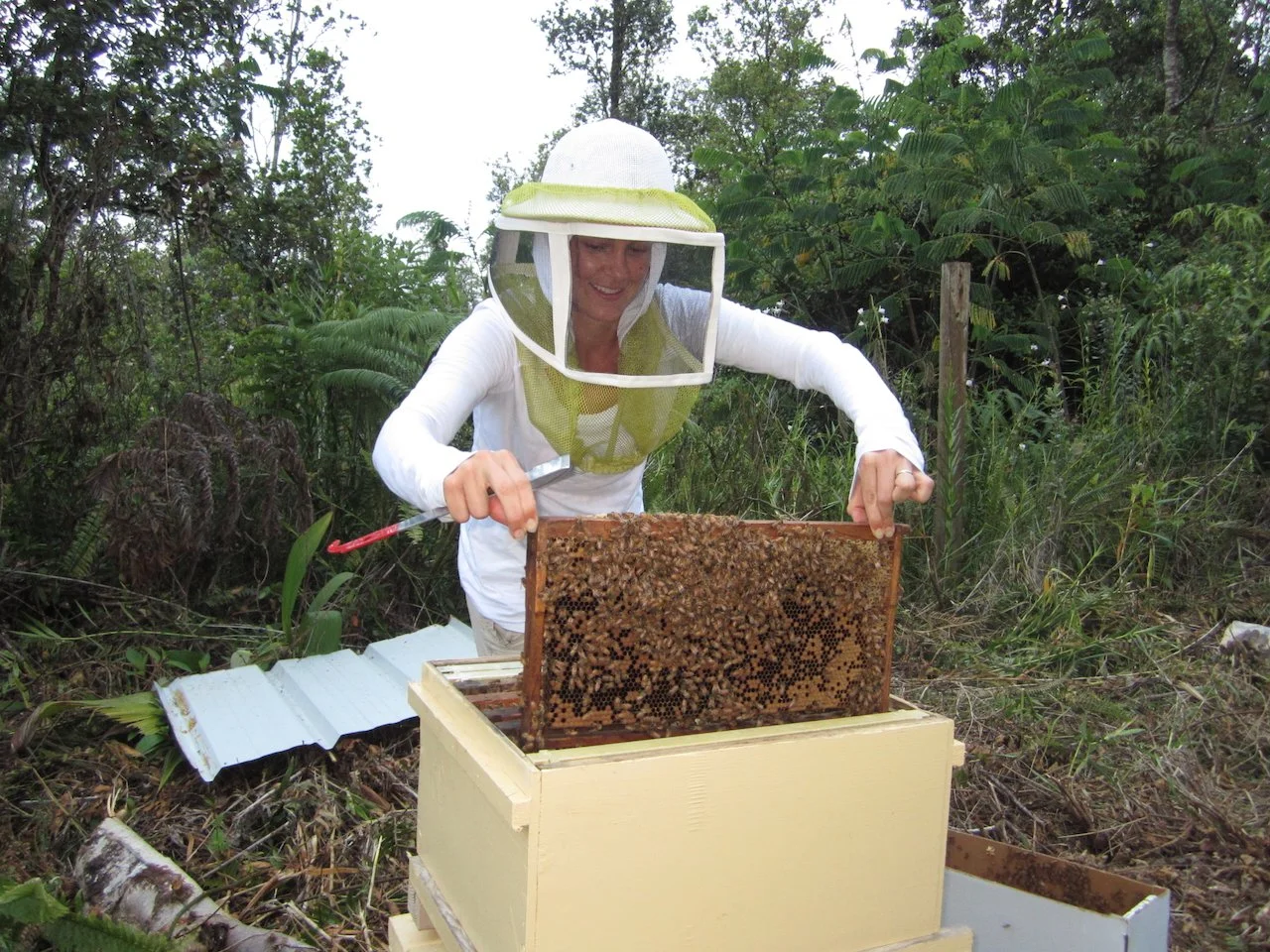

Most of that “fun” comes down to how hive inspections feel. During inspection of my top-bar hives, I only open enough space in a hive to lift 2 or 3 bars out at a time. So, most of the hive remains closed. I shift bars around, eventually checking every section, but at no point do I lift the entire roof off the bees’ home and let the sunlight blaze into their cozy little dark world. The buzz stays chill, the bees (and I) stay calm.
I work through a top-bar hive slowly and carefully, and since I’m only handing one comb at a time, I never need to struggle with lifting a 30-60+ pound box from the top of a sticky stack. (Honestly, those honey supers got to be an issue for me - I found myself avoiding lower-box inspections just to skip shuffling heavy supers on and off.)
With no queen excluder, the queen in a top-bar hive truly has free reign. I’ve found that the colonies generally do a nice job of keeping the brood nest to the center/right (away from the entrances on the left), and when it’s time to pull honey there are always bars of completely capped honeycomb at the outer edges of the hive. But I’ve always got to check every comb to make sure I’m not kidnapping the queen by mistake, and some colonies do seem intent on having a long brood nest through the entire box, with every comb holding a little brood and a little of everything else. I have seen some people DIY queen excluders for top-bar hives, but haven’t tried that route myself.
When a colony in a Langstroth needs space, it’s pretty straightforward to throw another empty super or two on top. A top-bar, though, has a set size limit. Some of mine are 3 feet long and some are 4 feet long, and during peak nectar flow when the bees have built wall to wall, the only way to give the colony more space is to pull out honey combs and replace them with empty bars. So, while my top-bar inspections are generally gentler, I do need to open up hives more frequently when they start to get crowded.
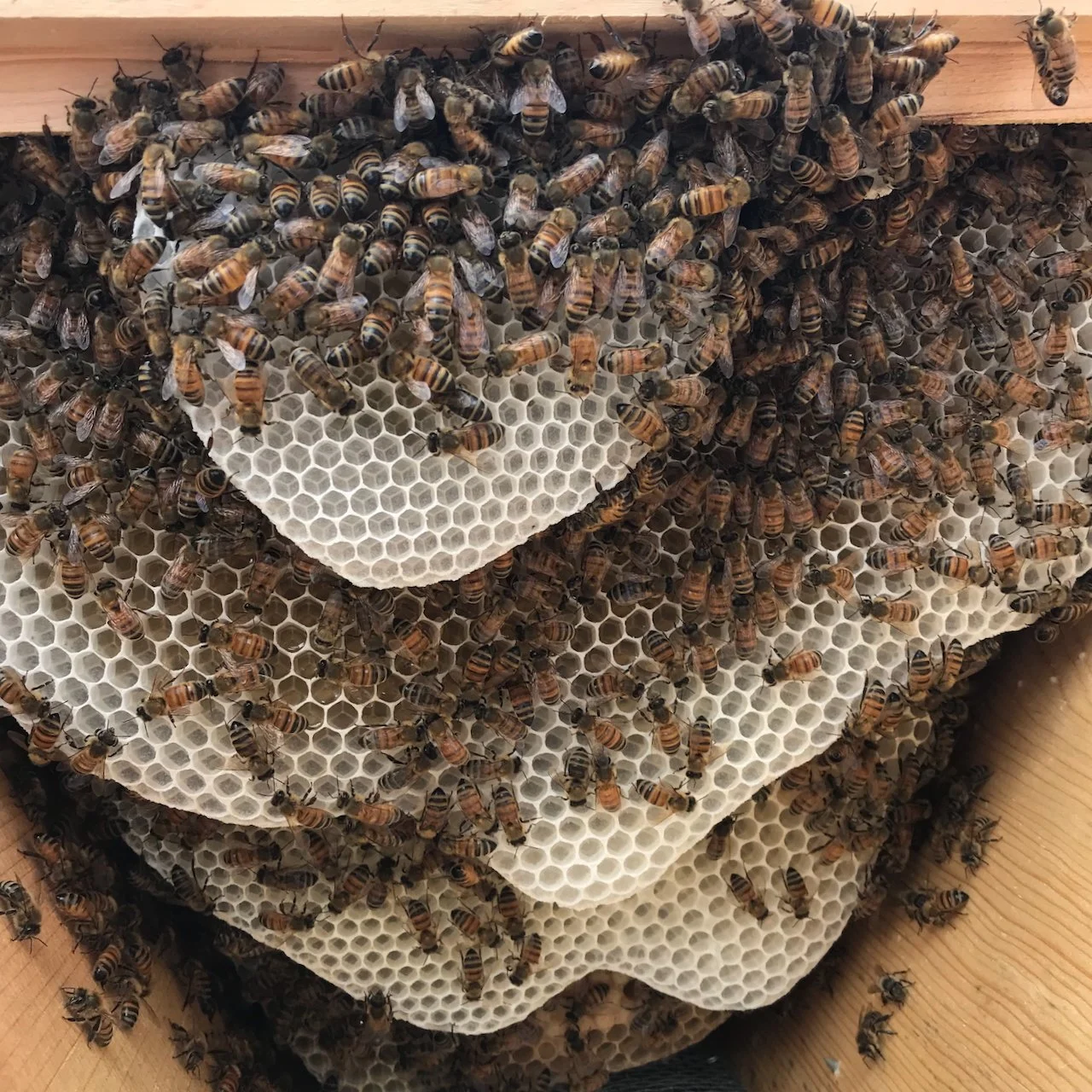
Beautiful, natural, fragile comb in a top-bar hive.
The combs in a top-bar hive are all free-form and foundationless. The bees build whatever they need in terms of cell size, and sometimes make cool tunnels through the comb so they don’t have to go all the way around. (Langstroth hives can also be run with foundationless frames, so this may not be a deciding factor between the two styles.) If I’m lucky, they stick to the plan for keeping everything straight and orderly. Cross-combing - when the bees create curving, interconnected comb that spans several bars at once - is definitely a challenge, but over the years I’ve learned to guide the colony to expand one comb at a time, using surrounding straight combs as a guide for building new combs. My biggest cross-comb messes have been the result of letting a growing colony go too long without an inspection - quick, frequent checks keep things on track.
Since the combs have no frames or foundations, honey can’t be harvested using a typical frame-spinning extractor. At my farm, the combs go straight into a cylindrical press, and as the top is cranked down, honey oozes out the sides and down into the bucket. It’s a slow, quiet process. I’ve also got an 8-frame extractor for Langstroth frames, and apparently I need to refine my technique - spinning day always ends up feeling a bit more “sticky and chaotic” than “calm and quiet”.
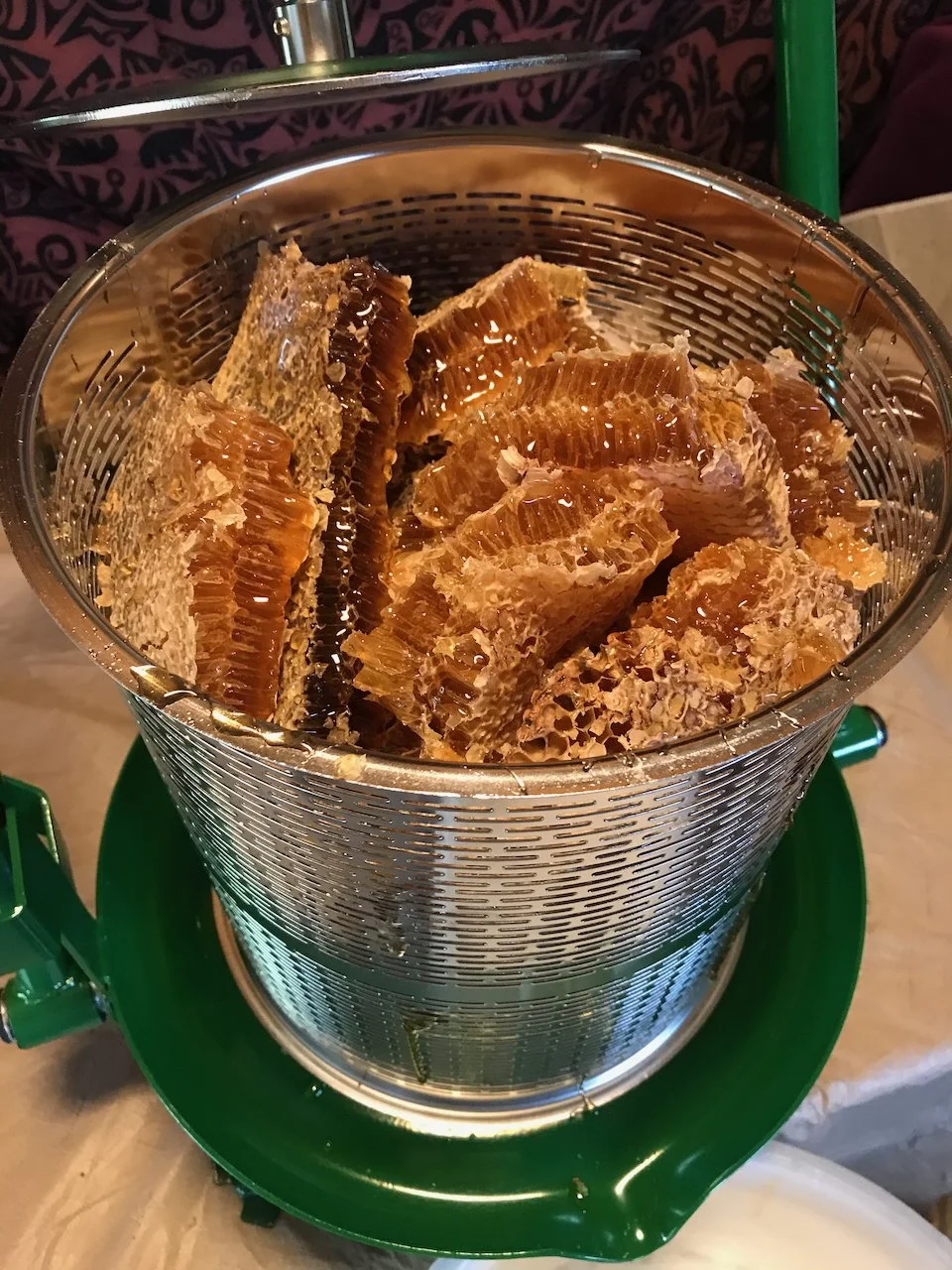
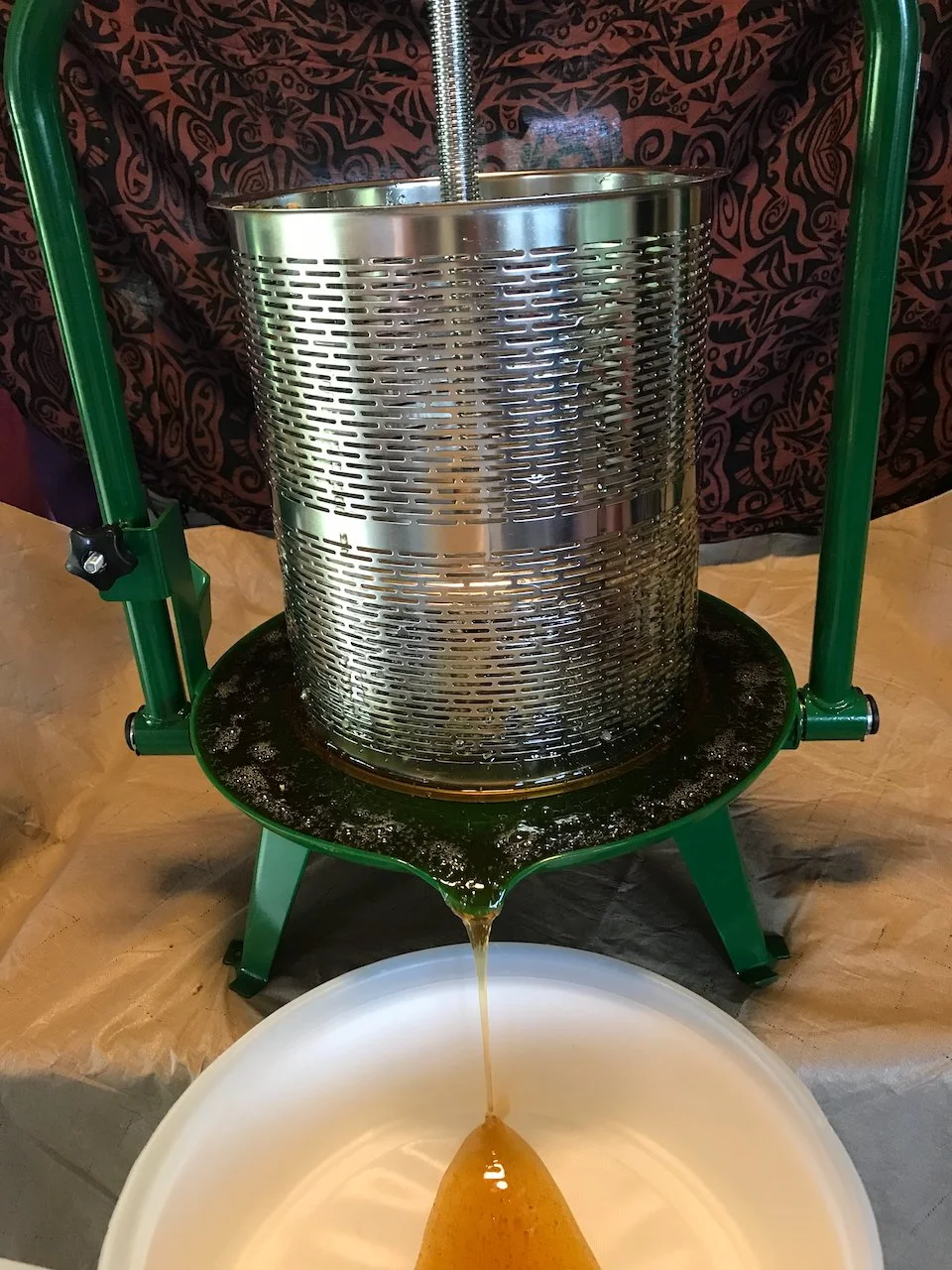
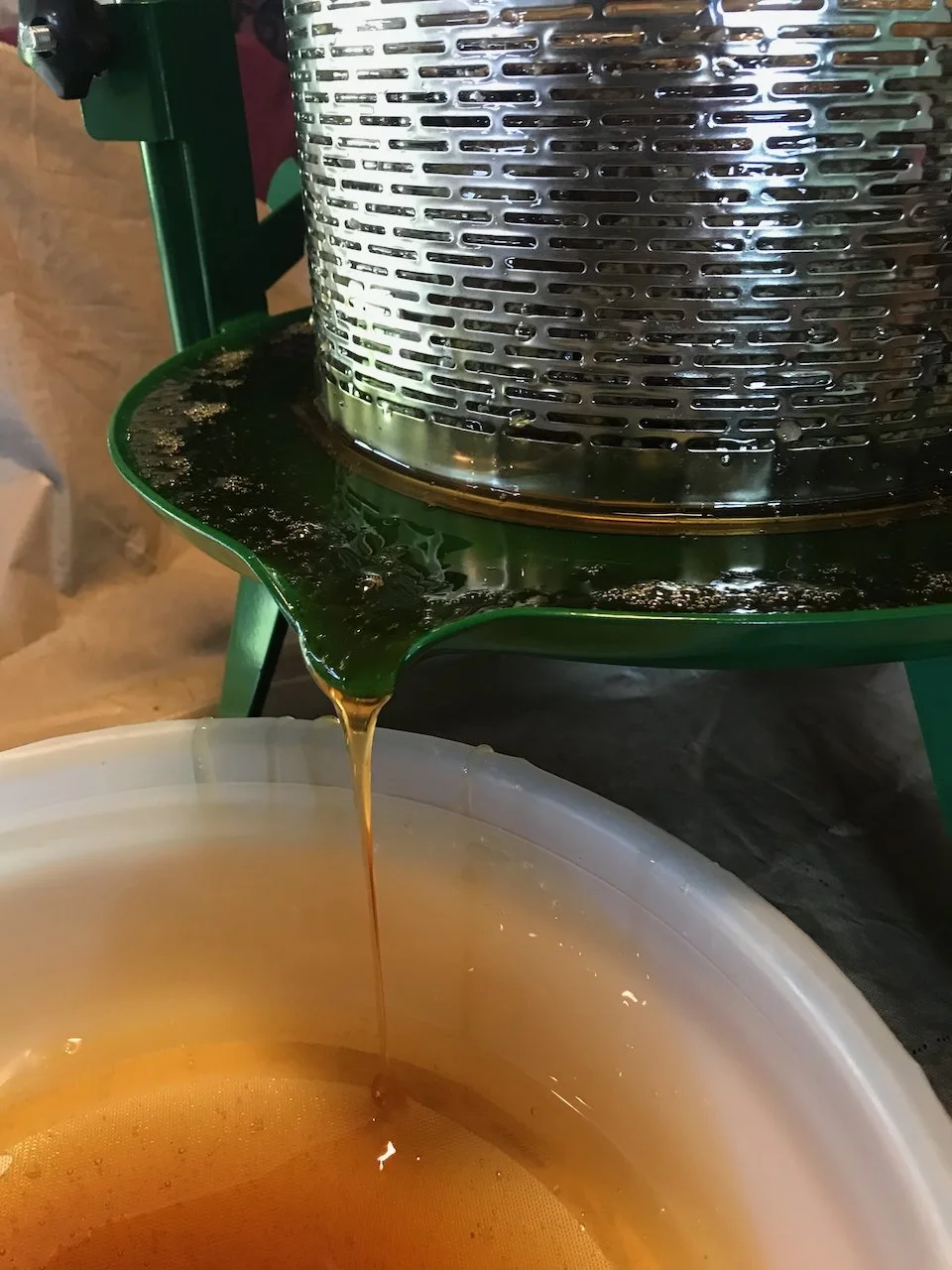
With the crush-and-strain method of the honey press I can multitask: give the press a couple of cranks, then walk away while the honey oozes. Come back later, do a couple more cranks, repeat, repeat. I do small batches - 10 or 15 combs will fill the press. And at the end, there’s a few gallons of honey and a massive cake of sticky pressed beeswax that I can take out to the solar wax melter. The bees will need to rebuild new combs to replace what I take, which is a double-edged sword: it takes them more energy and resources, but combs aren’t reused multiple seasons, so any pesticides or other contaminants are cycled out of the hive more regularly. Someone running a Langstroth hive could use this same honey-press method for smaller harvests - just cut or scrape the entire comb into the press. But for a bigger operation of more than one or two supers, it just wouldn’t be efficient.
With my hives right here at the farm, I’m not on any tight harvest schedule - I don’t get to everything today, I can return to the bees tomorrow. I can harvest just a few combs here, a few combs there, without adding or removing an entire box at a time. I’m fortunate that my honey harvesting space is only a few hundred feet from my apiary - top bar hives are big and awkward and not anything you’d want to move if you could avoid it. The combs themselves are more fragile than those in a wooden rectangular frame, so transporting them very far can get tricky. Since I’m only moving a few combs a short distance down the driveway, those combs can get a lot more care.
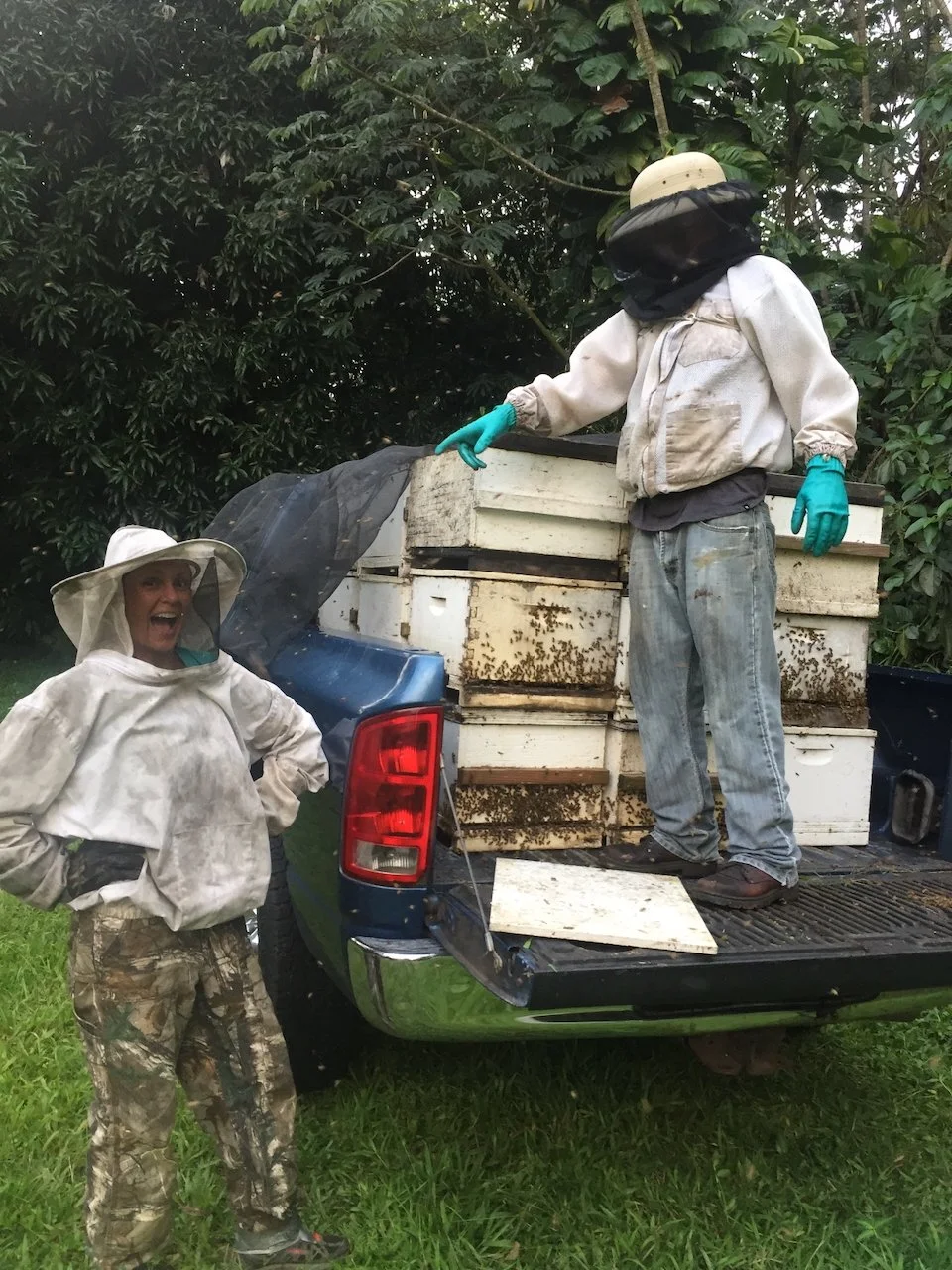
Loading up 27 Langstroths into one pickup truck.
In fact, transportation challenges are the main reason I’ve gone back to Langstroths for my recent expansion into other bee yards. If I can only visit those hives once a month, I know I’ll be pulling bigger honey harvests - hopefully entire supers all at once instead of a few bars at a time - throwing them in the back of my truck, and driving them across some very rough dirt roads. Top bar combs simply wouldn’t survive that. When factoring in travel time and fuel, Langstroth's higher honey yields make a big difference in maximizing production value.
Equipment sourcing is another factor. My husband and I have made all of our own hive components for the top-bar hives out of wooden planks and 2x4s. Here in Hawaii it can be difficult and costly to get equipment (oh my goodness shipping costs are rough), so being able to grab lumber from the hardware store and build a batch of top bars by the next day is a huge advantage. Of course, having power tools helps.
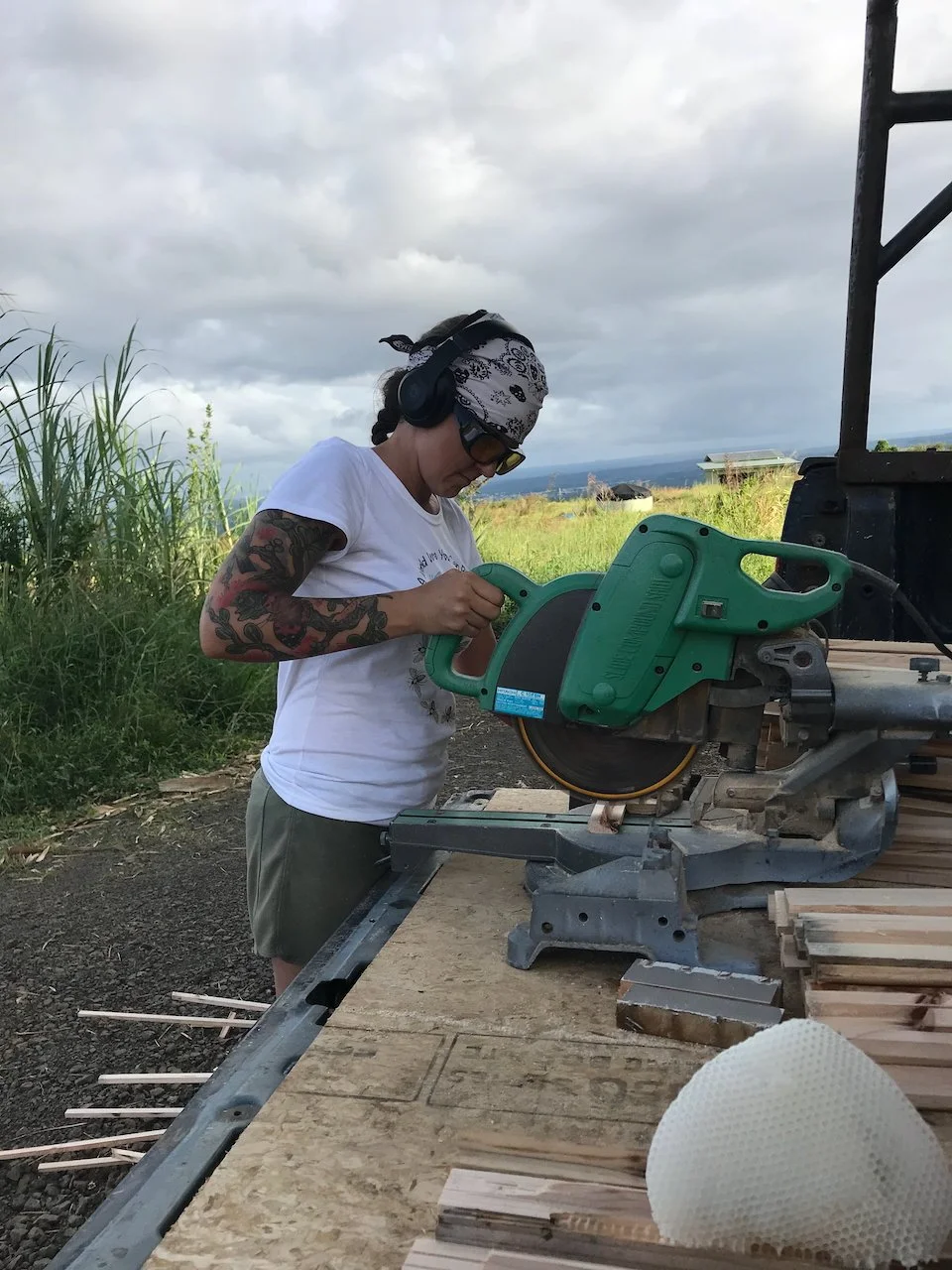
Beehives got built before the house. Priorities.
When I lay it all out, the main factors at play come down to a short list:
Physical demand: top bar means one light comb at a time; Langstroth means lifting 30-60+ lb supers to get to the boxes underneath
Honey yield: Langstroth scales better for commercial operations and generally produces more honey; top bar rewards small, frequent harvests instead
Wax production: Top-bar harvests rely on crush-and-strain, resulting in higher wax yields and cleaner, frequently renewed comb in the hive
Cost and equipment: top bar components are cheap and easy to build from hardware store lumber; Langstroth costs more but the standardized parts are worth it for more remote apiaries
Transport: top bar combs are fragile, the hives themselves are big and awkward to move; Langstroth frames are built to survive a truck bed and a rough dirt road, boxes are easier to move
None of this adds up to one hive being universally better than the other - it adds up to matching the hive to the site and goals. Top-bars stay right here where I can visit them daily, harvest patiently, and keep things chill for me and the bees. Langstroths go wherever the work demands more efficiency than gentleness. That's the plan I mentioned up top: not choosing a side, but building an apiary that uses each hive style for exactly what it's good at.
Recently, my husband and I have incorporated a new type of hive into the apiary, in hopes that it will blend the best of both worlds: a horizontal Langstroth. It uses the standardized wooden frames that can hold up to transportation and being spun in a honey extractor. But the whole hive sits at one level, frames all side by side, with no stacked boxes. No heavy supers to lift at harvest time, and no lower boxes being buried under the weight of the ones above. I get to enjoy the relaxed, low-lifting inspection style I love from my top bars, but with the frame strength and honey yield of a Langstroth. We’ve just filled our first horizontal Lang with bees, so time will tell, but I think it’s got the potential to be a game-changer.