When we moved to this farm, the soil told the story of a sugarcane plantation. It was dense, lifeless clay, and the soil tests confirmed what we suspected: nearly every nutrient a plant would need had been stripped away. The land had been overworked, and was then left to be overrun with invasive grasses with a root system only a couple of inches deep.
That’s the legacy of monocrop farming. It is a system built for short-term yield, not long-term health. When you grow just one crop in the same place, season after season, you take the same nutrients out of the soil again and again. To keep the system running, you have to pump it full of synthetic fertilizers. To keep the weeds out, you use herbicides. To keep the pests from taking over, you spray insecticides. And all of that kills the very thing plants need to thrive: the soil itself. Over time, the system becomes a loop of extraction and correction. It looks efficient from the outside, but it breaks the land.
Now, compare that to a food forest. Instead of rows of one crop, we planted a mix of everything. Plants for food, for medicine, for shade, for forage, for pollinators, and for the soil itself. A food forest mimics the layered structure of a natural forest, where tall trees, smaller trees, shrubs, vines, and roots all grow together, each filling a role in the system. We follow that same pattern, but with plants that serve our climate and our animals. Fruit trees form the upper layer. Shrubs like pigeon pea and moringa grow in the middle. Herbs, roots, and groundcovers fill in the spaces below. Vines climb. Flowers thread through it all. Instead of a single big harvest, there’s something useful growing year-round.
This kind of biodiversity keeps the soil healthy by spreading out the demands. Plants are not all pulling the same nutrients from the same layer of soil. Some feed the topsoil, others bring minerals up from deep below. Some prefer full sun, others thrive in dappled shade. When pests show up, they don’t find endless rows of their favorite crop. They get interrupted, redirected, or picked off by the predators that live in this mixed system. A mix of plants means a mix of insects, microbes, birds, fungi, and other life forms that keep each other in check. It is not about eliminating pests or disease. It is about balance. No one thing gets the upper hand for long.
On a practical level, this kind of diversity means resilience. If the citrus doesn’t do well one year, maybe the bananas will. If we have a dry stretch, the deep-rooted trees hang on. If it rains too much, the groundcover holds the soil in place. A food forest spreads risk with less pressure to fix everything at once. The system is growing stronger in the background, whether we are watching or not.
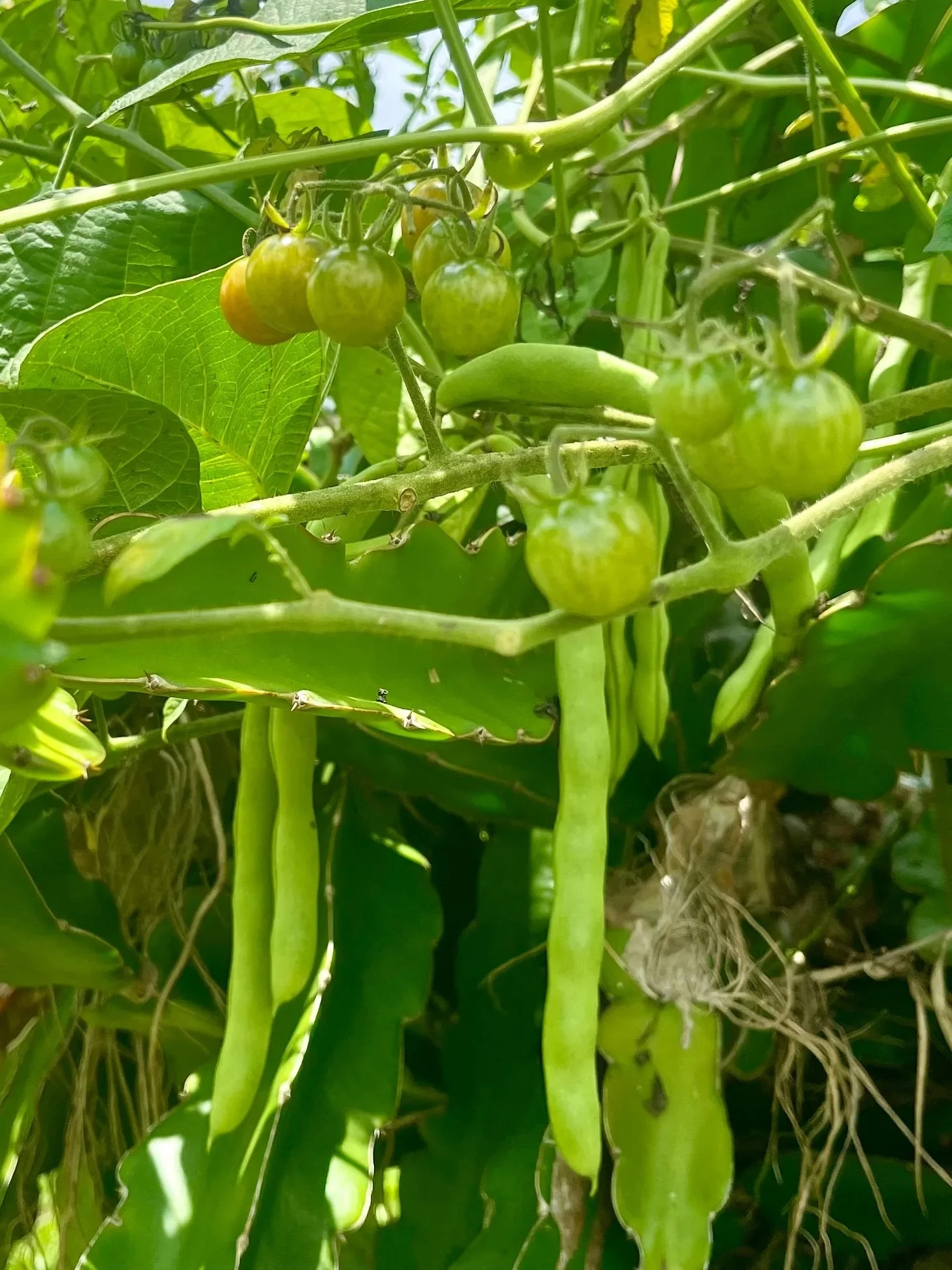
In our orchards and gardens, you’ll find avocado, breadfruit, cacao, bananas, ice cream bean, and citrus. Underneath those trees, we grow pumpkins, veggies, comfrey, taro, turmeric, moringa, herbs, pigeon pea, perennial peanut, and plenty of weeds that we’ve learned to let be. The system is alive and constantly shifting, but it holds together. It’s not strictly maintained, with clear borders and edges. It’s a bit of a chaotic mess at times, but with its own kind of beauty nestled into every little pocket.
We still work every single day. We still prune and weed and plant. But it feels like collaboration instead of control. We aren’t managing a machine, we’re tending a living system. And the longer we do this, the more evidence I gather, the more convinced I am that diversity is the foundation of abundance.