
When we moved to this farm, the soil was trashed. Decades of sugarcane monocropping had stripped the land and left dense clay. We quickly learned that if we were going to build a thriving farm, we had to start below the surface and bring balance back to the soil.
Our to-do list was LONG and we needed to implement some systems that could work in the background while we attended to other projects. We needed plants that could handle rough conditions and make things better without a lot of attention from us. We needed to eradicate the nasty and invasive grasses that had taken over and replace that with more diverse and beneficial plants. Many plants have contributed in their own way, but four plants stand out in our soil-building crew: pigeon pea, ice cream bean, perennial peanut, and comfrey.
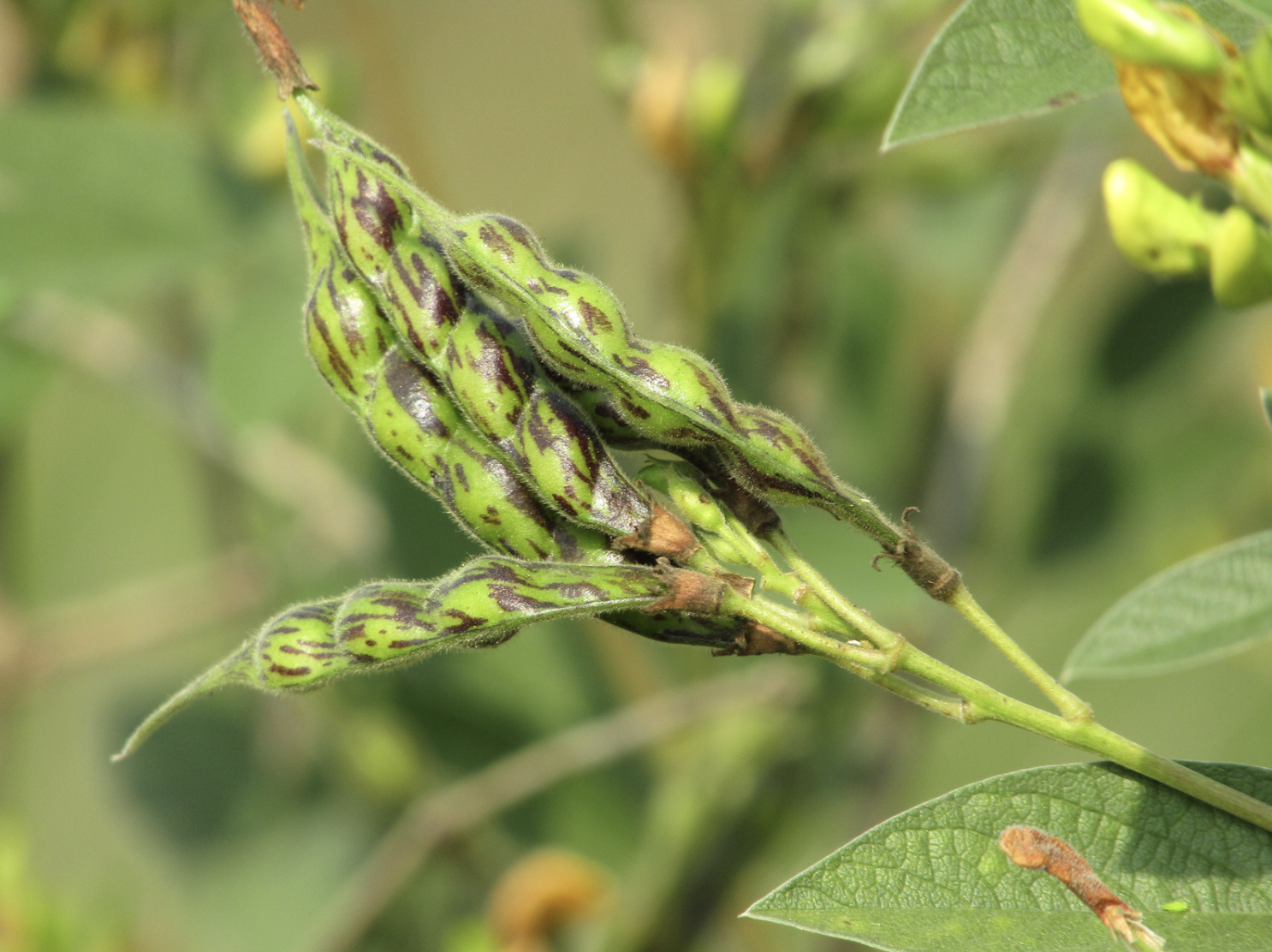
Pigeon Pea: The Shrub That Does It All
This scrappy shrub is a powerhouse. Pigeon pea grows fast and meets one requirement of my garden - it thrives with minimal care. Its deep roots help loosen our compacted clay, and its leaves make a great mulch when chopped and dropped around fruit trees. It’s a legume, which means it can pull nitrogen out of the air and turn it into a form that plants can actually use. It does this through a partnership with soil bacteria that live in nodules on its roots. When the plant drops its leaves, gets pruned, or eventually dies back, all that stored nitrogen gets released into the soil, feeding whatever’s growing nearby. That’s why we tuck pigeon pea in between fruit trees and around the edges of beds. It’s basically a living fertilizer factory with roots. Given that our initial soil tests showed essentially zero nitrogen in the clay, this was huge.
Added bonus: the goats love the leaves, and the flowers bring in bees and butterflies. The seeds are edible, too, for anyone who was to add to their food forest. Mostly, I just appreciate that pigeon pea feeds the land while giving our animals something to nibble on.
Ice Cream Bean
Ice cream bean trees (Inga edulis) are fast-growing tropical legumes that do double duty as shade trees and soil builders. They shoot up insanely quickly, cast dappled shade that helps cool the understory, and drop huge amounts of leaf litter that breaks down into rich organic matter. Plus, they fix nitrogen just like pigeon peas do. They get pretty large, but can be cut back to almost nothing, the leaves and branches used as mulch, and will regrow in just one season.
We have a couple of these trees in our silvopasture system, where sheep and goats graze beneath their canopy and it’s easy for me to break off a branch to give the goats as a snack. They keep the ground cool and moist, even in the dry season, and help support a mix of forage underneath. And if that wasn’t enough reason to love these trees, the sweet, fluffy fruit inside their pods is super delicious.
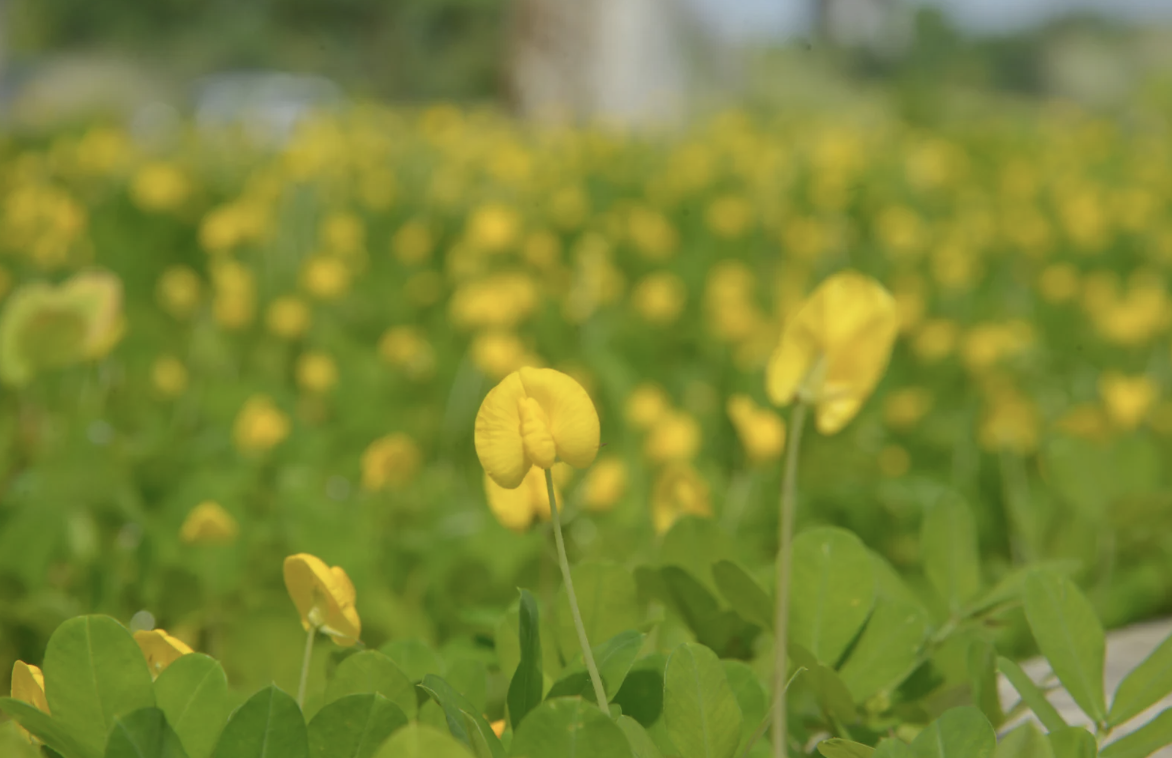
Perennial Peanut
Perennial peanut is tough, fast-growing, and thrives in poor, compacted soil - exactly the kind of conditions we started with. It grows as a thick, low mat, which helped us in our battle against the invasive grasses that had taken over in the orchard. Bonus: it makes happy little yellow flowers!
One of the first things we did in the fruit orchard was add a bunch of perennial peanut under the trees. Many people use this ground cover in walkways, but we wanted to get the benefits to the trees as quickly as possible. Planted under and around the fruit trees, perennial peanut will suppress weeds (yay for reducing my chore list!) and its nitrogen-fixing roots feed the trees slowly and steadily while supporting increased microbial life in the soil. Over time, we started dividing the plants (using cuttings or plant divisions) to use it in the orchard rows and garden walkways.
Besides being an awesome groundcover, perennial peanut also doubles as high-quality fodder for our livestock. It’s rich in protein (comparable to alfalfa). We let them graze lightly in the orchard or cut it fresh to feed when other forage is thin. It holds up well to rotational grazing, but like most low-growing plants, it doesn’t appreciate being trampled day after day.
While this plant has benefits in rebuilding soil and reducing the need for imported livestock feed, be aware that this plant wants to spread and is hard to remove once established. Be responsible in where you use it and where you deposit clippings, as it will grow a new plant from a small piece of stem.
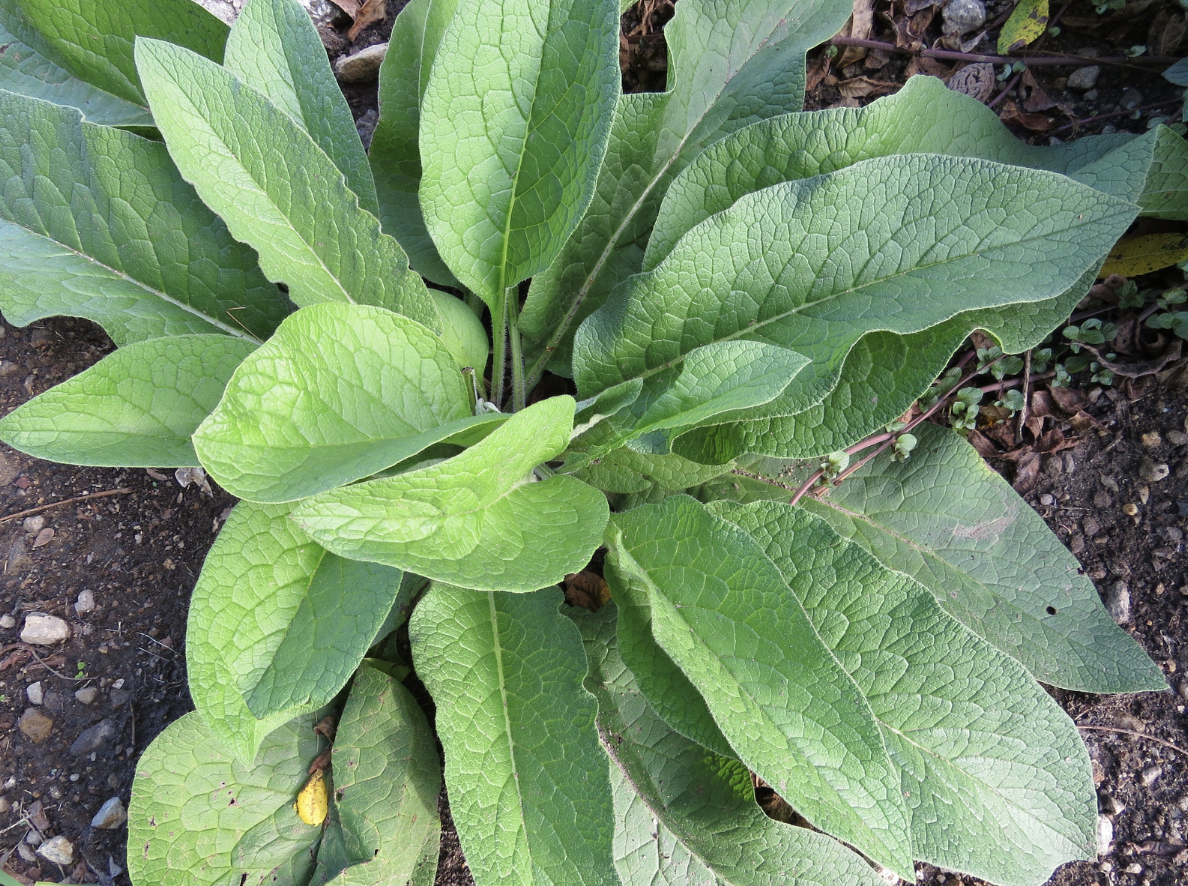
Comfrey
Comfrey works hard, wayyy below the surface. It sends down deep roots that mine nutrients like calcium, potassium, and phosphorus from the subsoil, pulling them up where other plants can reach. It grows fast, can be cut multiple times a year, and bounces back like it enjoys the abuse.
We use comfrey as a chop-and-drop mulch around fruit trees and garden plants, and sometimes I infuse an oil with dried leaves to add to salve. (Comfrey has a long history of medicinal uses - research that yourself, as there are plenty of benefits but also some cautions.) Bees go wild for the flowers, and the leaves break down into dark, rich compost that smells like magic.
We also use comfrey as occasional fodder, especially for goats and chickens. It’s high in protein and packed with minerals. But treat it like a supplement, not a main component of your animal feed. Comfrey contains compounds called pyrrolizidine alkaloids, which can be harmful to the liver in high doses over time. Used wisely, it’s a powerful plant that can support animal health without any issues.
One note of caution: comfrey doesn’t mess around. Once it’s in the ground, it’s basically permanent. Those deep roots can resprout from even the tiniest piece that you thought you dug out completely. We only plant it where we really want it long-term, and we never till it in. Look for a sterile variety like Bocking 14, which won’t spread by seed and is much easier to manage. Treat it like the useful but slightly feral plant it is.
The Power of Plant Partnerships
Each of these plants does good work on its own, but together, are pieces in a more complex puzzle. Ice cream bean gives shade and structure. Pigeon pea fills the mid-story with nitrogen-rich foliage. Perennial peanut carpets the ground and protects the soil surface. Comfrey cycles nutrients and feeds everything around it. They support our animals, reduce how much we spend on feed and fertilizer, and help us create a living system that’s more resilient with every season.
If you’re trying to build better soil, you don’t need to do everything at once. Just pick one. Start with a patch of pigeon pea. Tuck comfrey near your fruit trees. The methods described above were implemented gradually, over the course of about 5 years. Changes happened slowly in the beginning, but now we see that with just a little nudge, things are really taking off.