If you caught my last article, you know that when we first arrived on this farm, the soil was in rough shape. Decades of sugarcane monocropping had left behind dense, lifeless clay. We’ve been working hard to rebuild the soil and bring back the life it once held. Today I want to share what we’ve learned about silvopasture and rotational grazing. These methods are related, but either can be used independently.
Rotational grazing focuses on moving animals between different paddocks so that each section of pasture has time to rest and recover. This prevents overgrazing, encourages plant diversity, and allows for better nutrient cycling. This method can be used in open pastures with no trees, but it also fits well within a silvopasture system.
Silvopasture literally means "forest grazing" (Latin root words), or integrating trees and pasture with grazing livestock in the same space. By intentionally integrating woody plants, it creates a system that offers shade and shelter for animals, stabilizes the soil, and boosts biodiversity. Silvopasture also sequesters carbon, supports wildlife habitat, and produces additional products like timber or fruit.
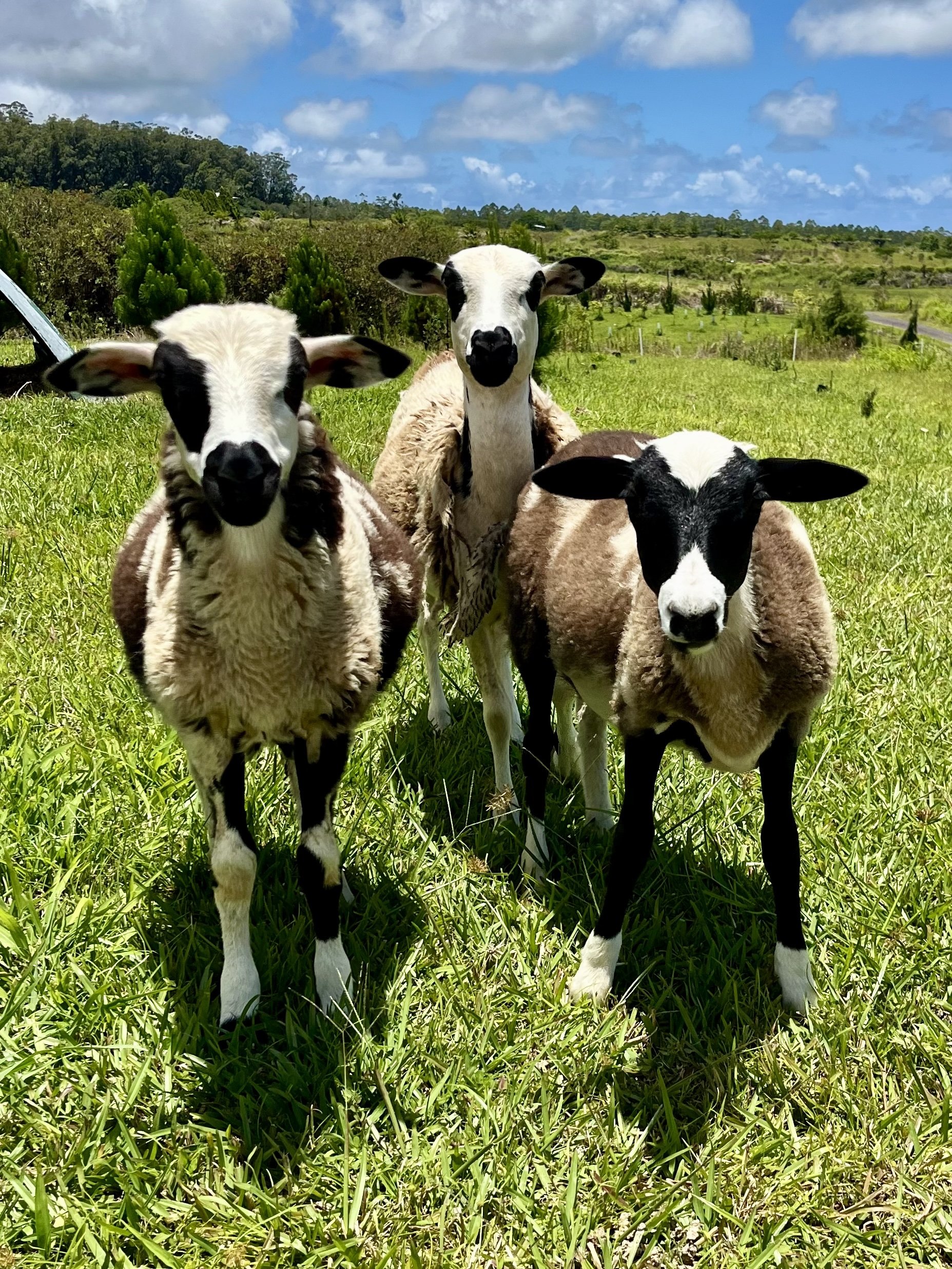
Mike, Sarah, and Dave keeping things nice and tidy so the baby Xmas trees don’t get lost in tall grasses.
Meet Our Crew
On our farm, goats and sheep do most of the work, but others have successful systems built around pigs, poultry, cattle, horses, bison, and more.
Sheep: The Gentle Grazers
Our sheep are the quiet, steady workers in this system. They’re mostly grazers, preferring grass and low-growing plants. They keep the pastures and orchards “mowed” and they fertilize the soil along the way. They’re also easy on the trees, usually leaving the bark alone and letting them thrive. We have our sheep maintaining an orchard of young Christmas trees at the moment, but they can also be rotated through our fruit orchard. We’re not sure if we love them more for their cute little fuzzy faces or the fact that they’ve cut down on our mowing and weed whacking chores. (Both, I think.)
Goats: The Brush Busters
Now, goats are a different story altogether. Think of them as the rebels of the farm world. They love shrubs, weeds, and a wide variety of plants that grow at a variety of heights - essentially, anything they can reach. We need to be extra careful about which areas the goats have access to, as they’ll decimate young trees or low branches pretty quickly. So, we think of them as more of a clearing crew than maintenance. They’re fantastic for cleaning up overgrown areas and tackling invasive plants, leaving fertilizer as they work and aerating the soil as they roam. And since our goats provide us with both milk and meat, we love knowing that they’re getting a well-rounded diet of plants that haven’t been treated with chemicals.
Chickens:
We’ve got a small flock of hens who rotate between a few sections of coffee trees. A portable electric net fence keeps them contained, but is easy to move when it’s time to rotate them to a new area. The chickens get fresh ground to scratch, plenty of little plants to browse (though they still some get daily feed), and they patrol for insects. The hens get a healthy diet, the trees get fertilized, and we get eggs - a win-win-win! Check out these super-happy coffee trees, loaded with beans:
Managing the Chaos: Rotational Grazing
An important element we’ve implemented at the farm is rotational grazing. This method is all about giving the land a chance to rest and regrow between grazing periods. Instead of letting the animals roam the entire pasture all the time, we divide the space into smaller sections (paddocks) and move them regularly.
We keep the animals in one paddock for a short period, usually a few weeks, where they eat, fertilize, and trample down any leftover plant material. Then we move them to the next paddock, allowing that first section time to recover (ideally, for at least six weeks). We currently have six fenced paddocks, and at least half of them are resting at any given time. The number of animals in the grazing paddocks varies, depending on our breeding/kidding schedules and the season.
Rotational grazing allows plants to rest and recover, which leads to stronger root systems and more organic matter in the soil. It also supports plant diversity by giving different species a chance to grow and thrive. When goats have free access to the entire pasture, they often eat only their favorite plants first and ignore the less appealing ones. Without any time to rest, those preferred plants weaken and eventually disappear, leaving behind only the tougher, less nutritious species. By rotating goats through smaller paddocks, they eat their favorite plants quickly and then have no choice but to move on to the ones they’d normally avoid. Meanwhile, the paddocks they’ve already grazed get a chance to recover and grow back healthier than before.
An added bonus is that rotational grazing helps manage internal parasites, which are a big concern in our warm, damp environment. The eggs and larvae of these parasites thrive in wet soil and can be ingested by grazing animals. By moving animals out of a paddock and letting it rest, we break the parasite life cycle and reduce infection rates.
By the time the animals return to a rested paddock, the plants have regrown, the soil has absorbed nutrients from manure, and earthworm activity has increased. The resulting plant diversity supports a healthier, more resilient ecosystem, improving soil structure and pollinator habitat while giving the goats and sheep a more varied and nutritious diet.
Silvopasture: Trees, Pastures, and Livestock Working Together
Silvopasture goes beyond simply having a few scattered trees in a pasture. This is a purposefully designed system that integrates trees, shrubs, and pastures to benefit both the animals and the land. The trees provide shade, windbreaks, and shelter for the animals, which helps reduce heat stress and improves overall animal welfare. The roots of the trees help stabilize the soil, reduce erosion, and increase organic matter in the ground. The leaf litter and root systems add nutrients to the soil and support healthy populations of fungi, microbes, and earthworms.
Silvopasture also boosts biodiversity by creating different layers of habitat for birds, insects, and other wildlife. That means more pollinators and beneficial insects, which are essential for fruit trees and other crops. As an added bonus, silvopasture systems can produce additional products like timber, fruit, nuts, or firewood, offering an extra source of income or resources for the farm.
On our farm, the sheep do most of the work where trees are involved, since they focus mostly on the grasses and leave the rest alone. Now that some of our trees are getting older, we’re feeling more confident about letting the goats into those areas - under supervision, and only if we’re okay with sacrificing any low branches.
What We’ve Seen
After a few years of utilizing these systems, we’ve seen definite improvement. There’s so much more organic matter in the soil, and tons of worms, millipedes, and mushrooms. Our animals are thriving on the fresh, varied forage and love lounging in the shade of their trees on these hot summer afternoons. I’m enjoying the fresh milk and eggs - and the fact that my feed and fertilizer costs are down.