We’re in our second year of growing slimy corn for science, and it might rewrite what we think about soil fertility.
Corn is typically a heavy feeder that sucks a lot of nutrients out of the ground. So, most corn farmers rely on synthetic fertilizers to keep up with its appetite. But we’ve been working with a variety that could change the game.
These corn plants grow just like other varieties, but they have developed a unique adaptation that allows them to partner with nitrogen-fixing microbes. These microbes pull nitrogen straight out the air and convert it to a form the plant can use as a kind of built-in fertilizer system.
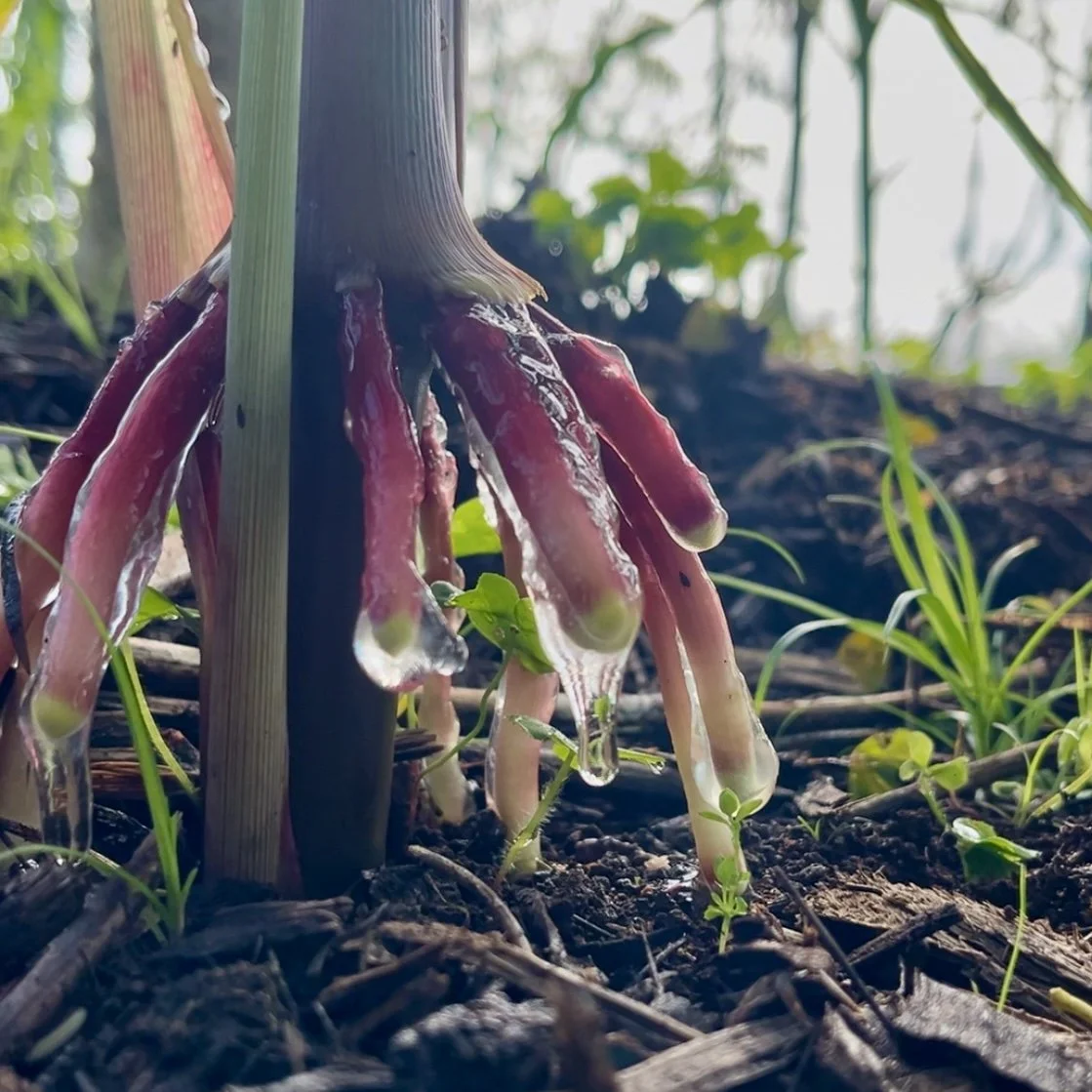
The way the plants do this is the crazy part: they grow slimy, mucilage-covered aerial roots out of the base of the stalk, usually covering the bottom 6-10 inches. The mucus is a sugary goo that creates a low-oxygen environment that’s perfect for the microbes to do their work. These nitrogen-fixing traits work very much like legumes, which grow specialized root nodules to partner with microbes under the soil to make nitrogen more accessible to the plant.

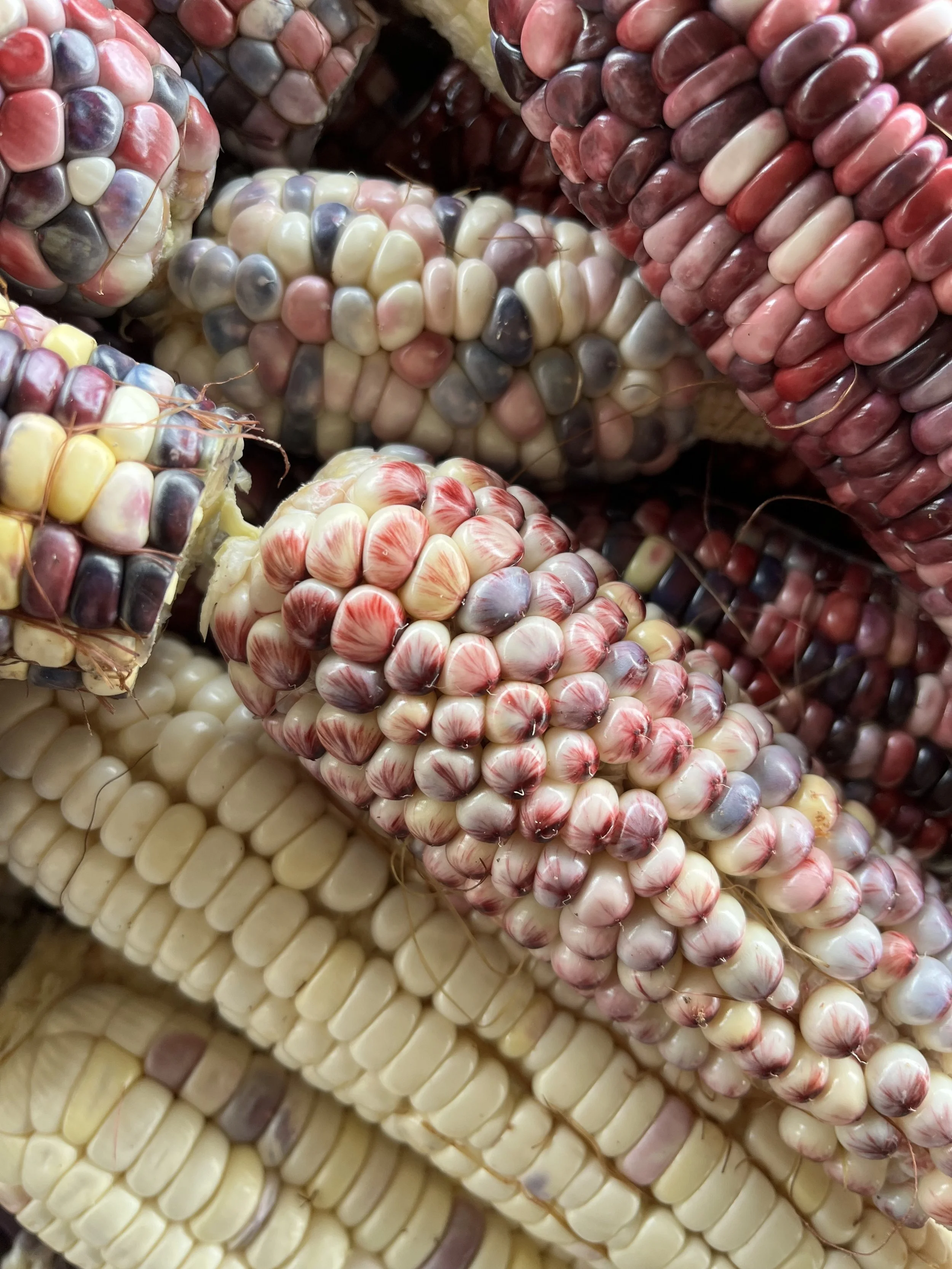
This variety, called Olotón, was first studied in a remote area of Oaxaca, Mexico, where it had been grown and preserved by indigenous farmers for generations. When researchers analyzed it, they found that these plants were able to pull 80% of the nitrogen they need out of the air, significantly reducing the need for additional fertilizers.
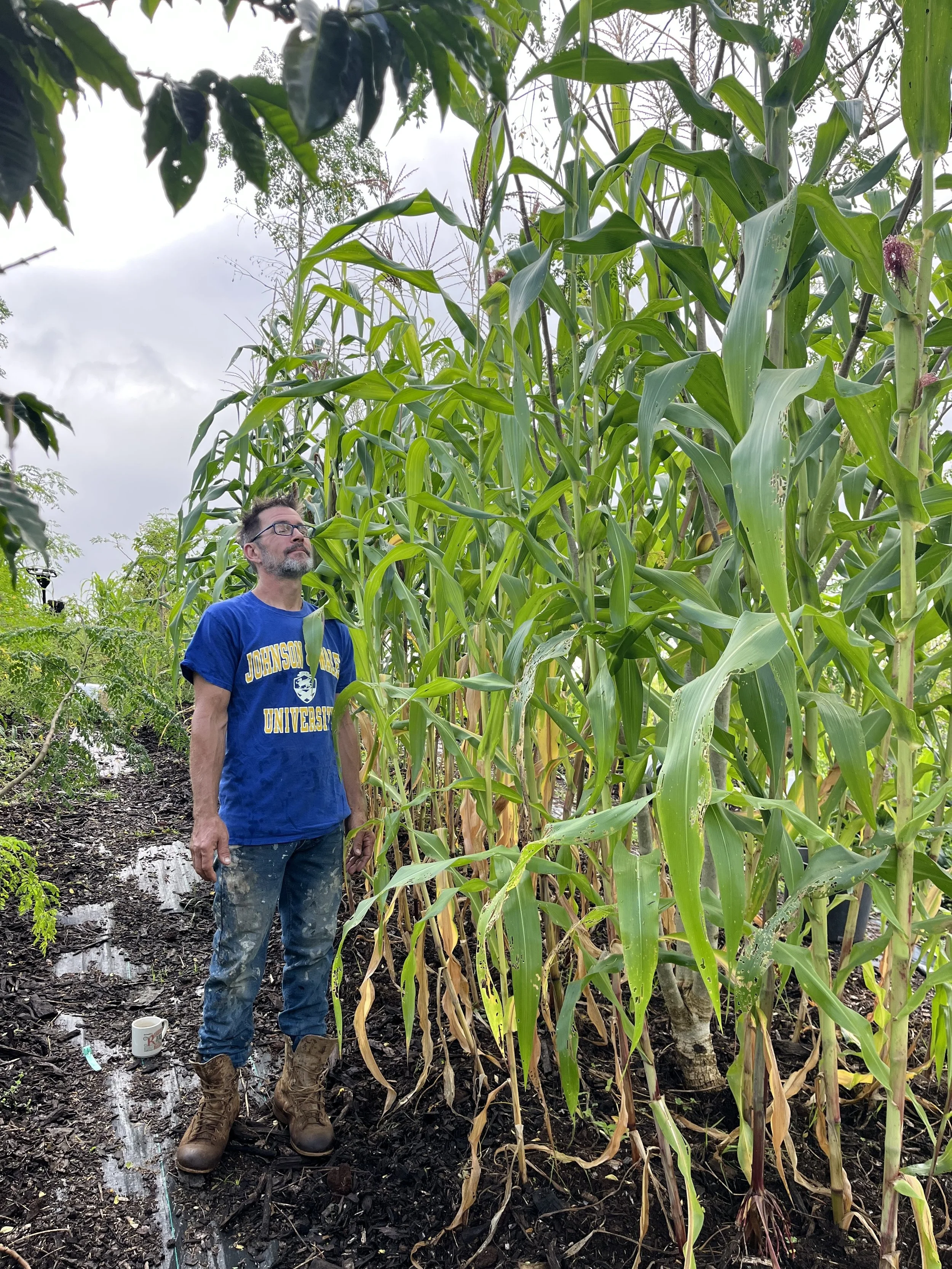
This type of corn isn’t ideal for large-scale plantings - though it has thrived in our small food forest, interplanted with other trees and plants. It’s not as productive as modern commercial varieties, and it gets so tall (easily reaching 12-15 feet) that we found it needed additional support. However, scientists are currently experimenting with cross-pollinating the nitrogen-fixing corn with the varieties that are more typical to modern agriculture. A successful hybrid could mean corn that is both high yielding and also able to meet some of its own nitrogen needs, reducing reliance on synthetic fertilizer.
The seeds we have grown here have contributed to this ongoing research, and the project itself has been a fascinating learning experience. We aren’t switching to all corn, all the time, but we’ll continue to grow and harvest these seeds as one more way to experiment with low-input crops that contribute to a healthy, balanced system. And as a bonus, we enjoy daily visits to our weird plants with the mucus-covered alien fingers.
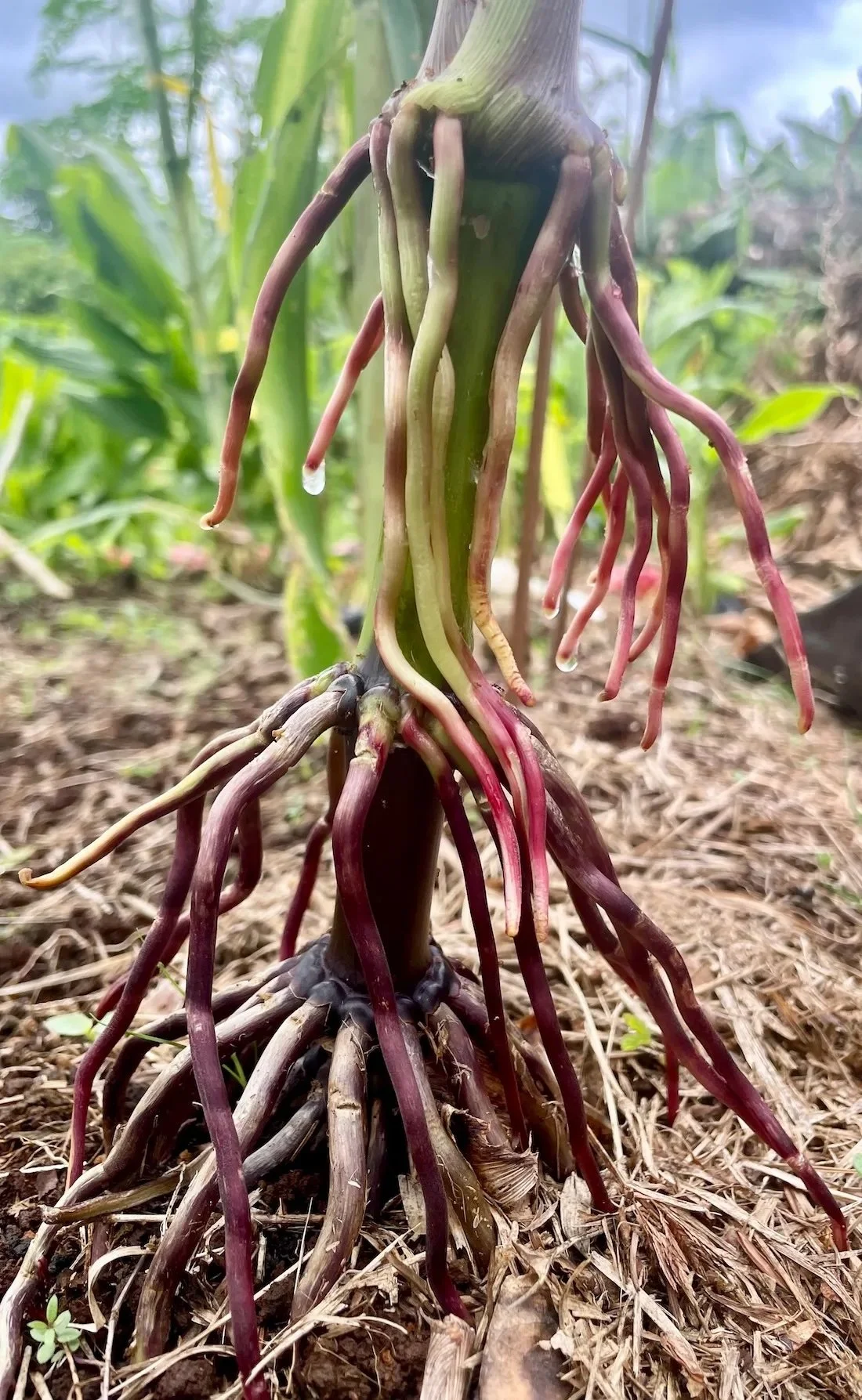
Aerial roots of pigeon pea pulling nitrogen straight from the air; one of our favorite workhorses on the farm in Hilo, Hawaiʻi.
Mahalo to Sustainable Bioresources in Naʻālehu for getting us started with this project.