
Thinking about adding a goat to the family? Read this first.
Every time I see one of those Instagram posts featuring an adorable baby goat in pajamas, jumping around in someone’s living room and doing a kicky dance, I have a few seconds of “awwww” before I shake my head and sigh.
Yes, baby goats are freakin’ cute! And curious! And they have loads of personality!
But every time I get an email from someone who wants a baby “house goat”, I cringe a little. Sure, there are some people who are committed to the goat-lover lifestyle. They’ll do the research, build the fences, buy the minerals, and learn the ropes. But let’s be real - the goats you’ve seen on social media are unique, and the clips you’ve seen are a carefully edited highlights reel. It’s not the whole story.
So, here’s my little public service announcement:
Goat are not dogs.

Mo is pretty sure she’s a dog.
They have completely different social, intellectual, and physical needs than your average house pet. So, if you’re thinking about going down this road, please know what you’re getting into. Jumping in without all of the info could lead to a lot of frustration, fencing repairs, and vet bills. Once that cute little baby is a full-grown goat, the novelty could wear off pretty quickly.
Goats ARE smart and social - but in their own way. And on their own terms.
Yes, goats are social animals and some can form a positive bond with their humans. They might learn to recognize your voice and come when called (if treats are involved and there aren’t more interesting activities elsewhere). But, unlike dogs, goats don’t have any desire to please you. They’ll listen… unless they don’t feel like it.
They definitely don’t listen when I’m yelling “STOP STRIPPING THE BARK OFF THAT TREE” (the tree they devoured in the 4.3 seconds they had while I turned my back to fix the gate latch).
Goats have vastly differing personalities. I’ve owned a lot of goats over the years, in small herds where I interact with them daily. Some seek out head scratches and will sniff out the treats in my pockets. But others are simply not into people, and never will be.
If you follow my farm, you know Beatrice. She’s a perfect example. I’ve had her since she was young. She’s been treated with the same care and affection as every other goat here… and she still wants absolutely nothing to do with me. She is incredibly committed to staying a solid five feet away from all humans at all times, which makes some routine chores extremely difficult. I’ve spent years perfecting the art of tricking her into the stanchion for a basic health check. If you’ve never tried to wrestle a freaked-out 100+ pound goat while trimming her toenails, well… you haven’t lived. And this is just how Beatrice is. We have a kind of mutual respect, but we both know she’s going to do whatever the heck she wants.
On a scale from loyal golden retriever to antisocial raccoon, most goats fall somewhere in the “sneaky roommate who raids your fridge but pays no rent” category.
Goats use their intellect to get into trouble.
They are crafty. And always on the lookout for a weakness in the system. They jump, chew, climb, and push through all kinds of problems you didn’t even know you had.
Goats need plenty of time outside - but they’ll need secure, tall (like really tall) fencing. It’s been said that if your fence doesn’t hold water, it won’t hold a goat.
They’ll also need enrichment. A bored goat is a goat who will absolutely redecorate your porch with their teeth.
That said, if you’re up for a battle of wits, goats can be a delight to observe and interact with. Some of my most favorite goats are also the ones who cause the most headaches. Just make sure your fencing is solid and your sense of humor is intact.
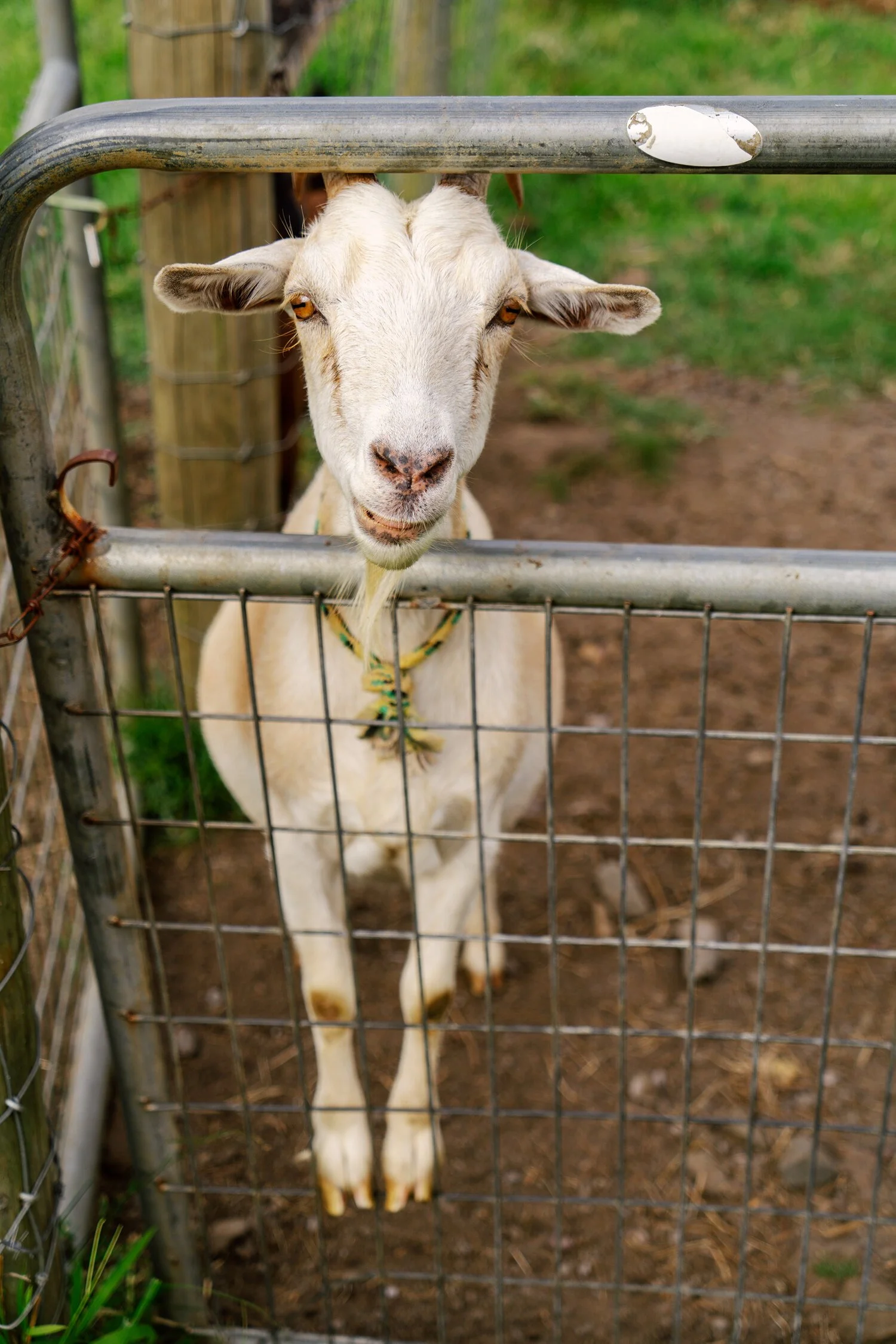
Sandy! How many times have I told you to keep your hooves off the gate!?! (photo credit: Abby Ferguson)
Goats have special dietary needs.
Some people imagine that “feeding time” means simply sending the goat out into the backyard and letting it fend for itself. That’s not how this works.
It’s a myth that a goat will be a good lawn mower or will “clean up the backyard” safely or efficiently. They don’t graze grass in the way sheep do - they nibble a bit of grass here and there, and then devour the bushes, the trees, and the flower garden. Then they chew the top off the treat bin and eat all of those.
If your goat doesn’t have access to a wide variety of forage plants, they’ll need supplemental food. Hay, alfalfa, sweet cob… get to know your goat’s needs and see what’s available at your nearby farm supply store. While you’re there, grab some mineral supplements. Selenium, copper, and other elements are critical to goat health and often lacking in local forage.
Goats need regular hoof and health checks.
If you think trimming a dog’s toenails is rough… go watch some videos on goat hoof care.
How often you’ll need to trim depends on your terrain. When we lived in an area where the goat pen was very dry and rocky, our hoof care was minimal. But now, in a wet and muddy region, we have to work on goat feet every few weeks. If we don’t stay on top of it… hoof rot. Ugh.
Goats are also prone to intestinal worms, and this the biggest ongoing challenge we face in goat health. It’s not a matter of if your goat gets worms - but when. You’ll need to educate yourself on which worms are most problematic in your area, and which approach is best for managing them. Your local ag-extension office might be a great resource. Learn to recognize signs of anemia, so you know whether your deworming plan is working.
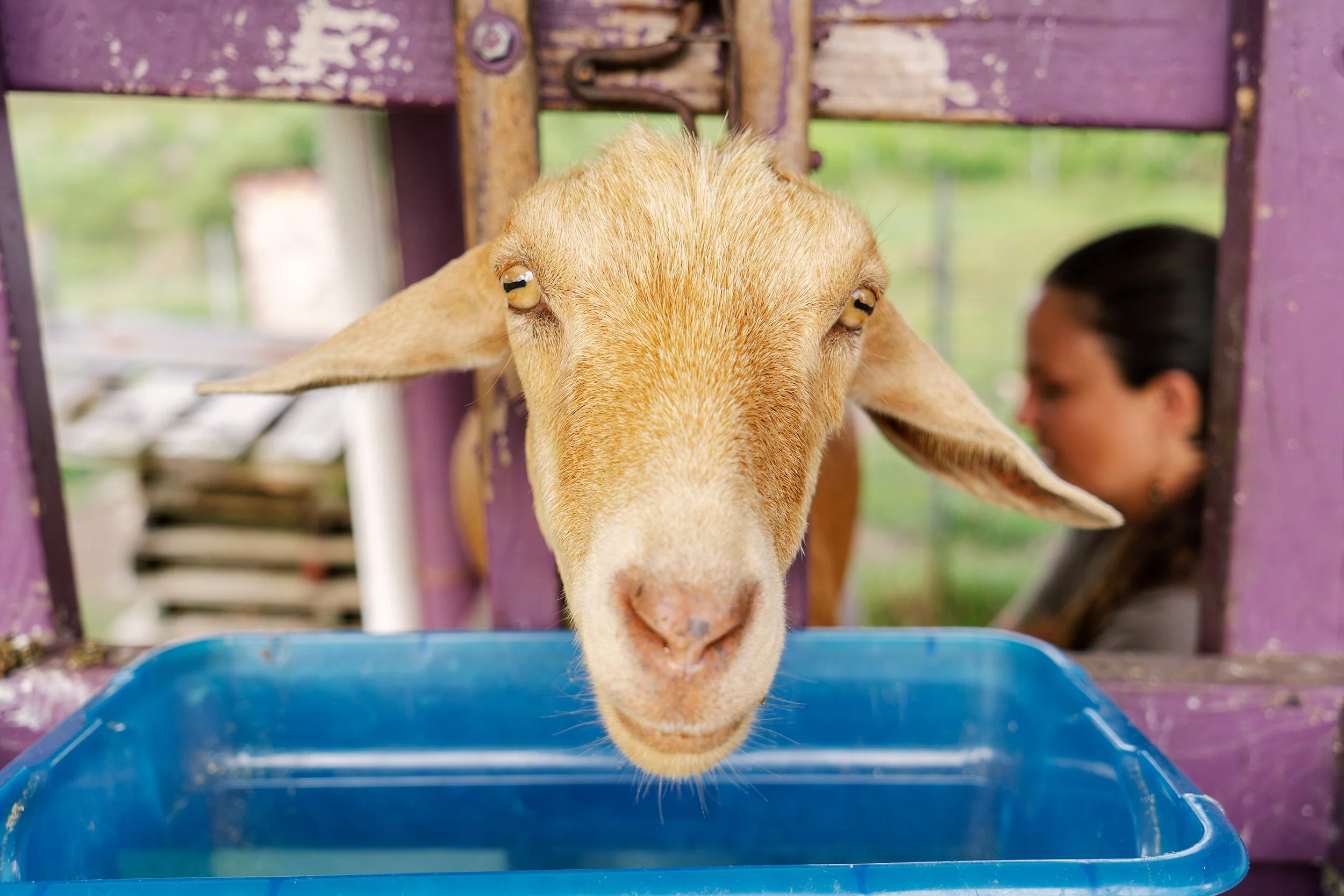
Sweet Sunny, who has been trained to jump up into the stanchion for a health check. (photo credit: Abby Ferguson)
You might be on your own with health issues.
Before bringing home a goat, check with your vet to see whether they treat livestock - you may need to find someone who specializes in farm animals. Or, you may need to learn to handle some health issues on your own.
I’ve had to learn how to draw blood, how to give injections (we vaccinate our goats), and how to assist during kidding season. My neighbor keeps goats and she has learned how to put a goat’s leg in a cast, because, as mentioned earlier, goats get into trouble and sometimes stuck in fences.
This might sound intimidating, but honestly, it also feels kind of amazing to know that I’ve learned these skills and handle whatever the goats throw at me. There are fantastic resources, books, and online groups where you can get support. Just understand that it’s part of the package and it helps to be prepared.
And while we’re on the topic of planning ahead… who’s going to watch your goats when you go on vacation? Dropping them off at the kennel isn’t an option. Make sure you’ve got someone local and reliable who can goat-sit.
Goats need goat friends.
Dogs imprint on humans and become part of the family. But goats? They really want a goat family.
They are herd animals at heart, and will always choose a goat friend over a human friend. They might bond with you (especially if you have snacks), but when you’re not around, they’ll need at least one companion. A goat without a friend will get lonely, loud, and destructive.

These lucky babies will happily spend all day playing with their goatie friends.
The moral of the story?
If you’re willing to learn, to mend fences, to perform health checks, to problem-solve and adapt… goats can be an absolute joy.
They’re funny, weird, and full of personality. They’ll keep you on your toes. You’ll celebrate your first successful hoof trim like it’s a national holiday. You’ll start to understand their moods, their pecking order, their little quirks. And you’ll probably fall in love with them, even if they aren’t all that concerned with what you think of them.
So, it’s true, goats are not dogs. But if you know what you’re getting into, you just might end up with some of the most entertaining companions you’ve ever had.