The land teaches us. Usually the hard way.
What Farming in Hilo Actually Looks Like (For Us)
Hawaiʻi island alone has eleven of the world’s thirteen climate zones. Farming “in Hawaiʻi” isn't one experience. The dry west Kona of the Big Island looks nothing like the wet Hilo side. Puna is different from Hamakua. Volcanic rock with two inches of topsoil is a different situation than clay that drains like concrete. This is just our version of things, figuring it out as we go.
Everything grows fast (including the weeds)
The wet side of the Big Island is warm year-round, gets insane amounts of rain (over 200 inches a year at our location upslope of Hilo), and once the soil has something to work with, things take off. That's the good news. The other side of it is that "everything" includes the things you didn't plant.
The weeds grow as fast as the vegetables, sometimes faster. They reclaim ground we cleared last week, while the vines find the fence and start working on it. There are weeks where it feels like the plant life is running the show, and we’re just running behind with a machete. Mostly, I’ve made peace with the weeds and realized that a nice-and-neat homestead aesthetic may not be worth the battle. The wild plants and animals are welcome to thrive right alongside the garden projects I’m tending.
Living in a rainforest: behind the scenes
People hear 'two hundred inches of rain a year' and picture romantic waterfalls, lush jungle, and rainbows galore. They're not wrong. They're also not the ones doing morning chores in it.
After a day or two of rain, you need rubber boots just to walk out to the goat pen. After a week or two (or six), every boot you own has taken on water and is lined up along the house, upside down to drain. Everything made of metal rusts faster than you'd expect (especially those garden tools I lose out there and don’t find until weeks later). Wooden shelters rot and feed has to be stored carefully so it doesn’t go bad. The goats' hooves need more attention in wet conditions. But, you learn to work with it. You build with materials that handle moisture, store things off the ground, check on everything more often than you would anywhere else.
And then there's the flip side, because there is one. We never have to irrigate our plantings. Ever. The animal shelters have their own rainwater catchment systems, same as the house, so we very rarely have to fill anyone’s water tubs. The gravel road stays damp enough that it doesn't kick up dust clouds when you drive in. The land is green in a way that still gets me, and watching raindrops dance on the kalo leaves is one of those things I never get tired of.
What grows here and what doesn't
Some things that seem like they should be easy simply aren't. I’m still learning to cope with my tomato disappointment. I had hoped that the warm, wet climate would be tomato heaven, but it's not. The skins split in the rain. Blight takes the plants out eventually, no matter what I do. We grow cherry tomatoes now (they are less likely to split) and we overplant on purpose, because some of them are going to make it and some aren't. But tomatoes simply don’t thrive in our little microclimate.
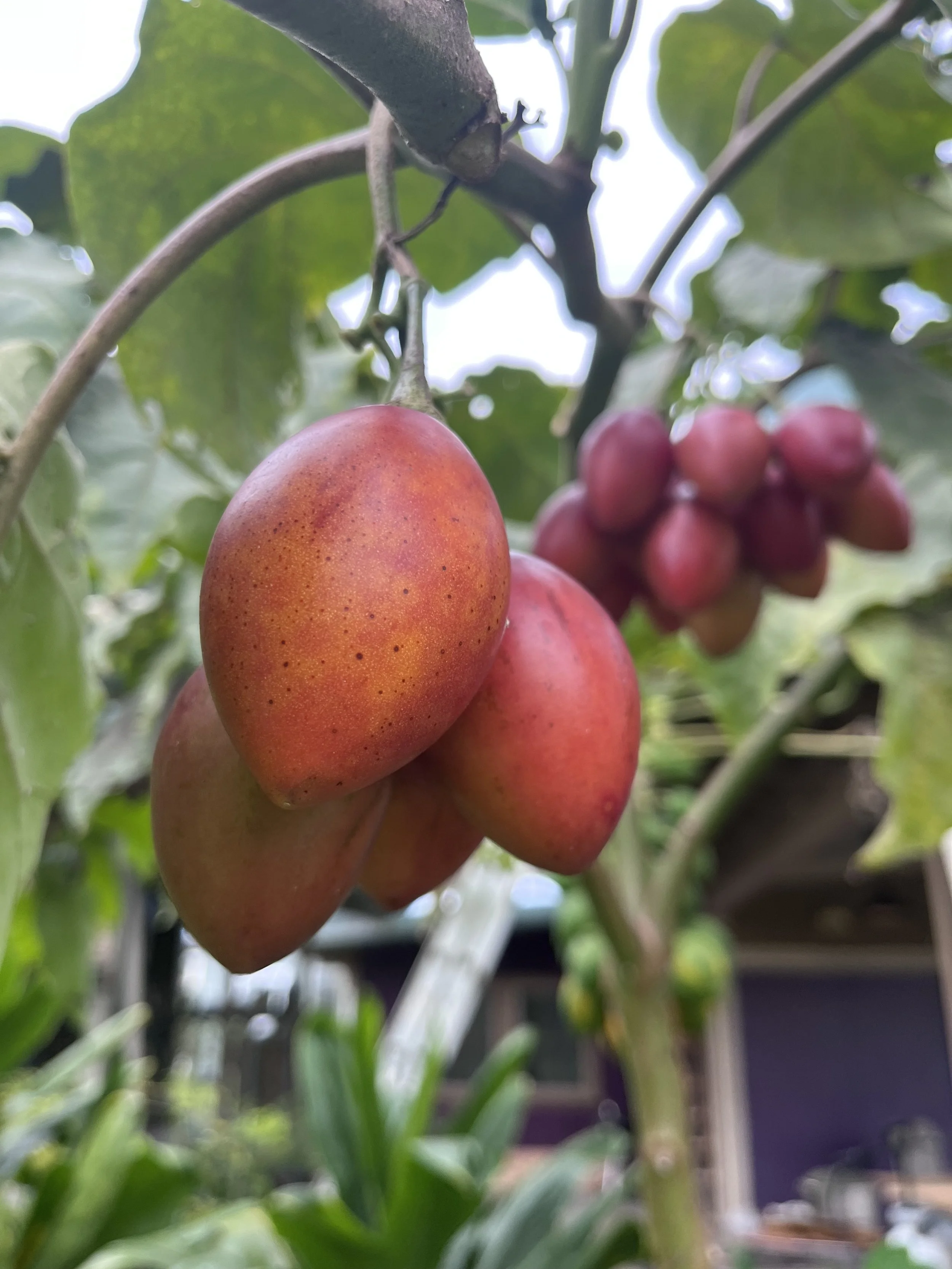
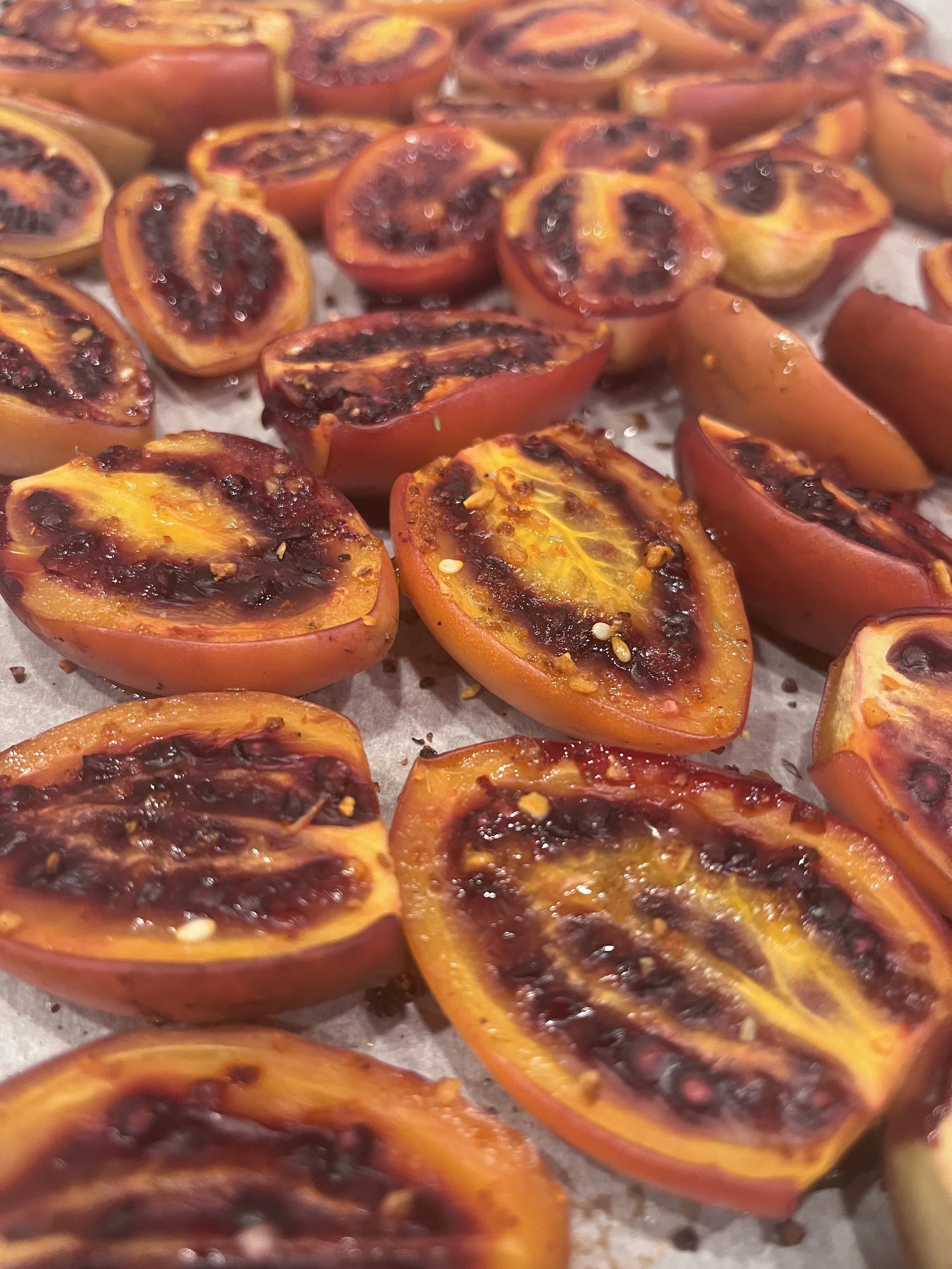
But figuring out what doesn't work here has pushed us toward things we never would have planted otherwise. I’ve coped with my tomato issues by embracing tamarillos. They're a tree tomato; they handle the humidity without complaint, produce prolifically throughout the entire year, and taste like nothing you'd find at a grocery store anywhere. We eat them fresh off the tree and roast them for marinades and pasta sauce. They're becoming a farm staple in a way that regular tomatoes never will be.
The pigs
Twenty years ago, I could not have predicted that feral pigs would become an operational challenge in my daily life and, on one occasion, a personal vendetta. But here we are.
Feral pigs are a problem in a way that’s hard to grasp until you’ve had experience with them. They're smart, strong, and completely committed to destroying whatever we’ve been planting. They root up gardens, dig up orchards, collapse fencing, and create mud wallows in places we need to walk. They have come onto our lanai under the cover of night to help themselves to a rack of bananas that got harvested and left out. They never give up.
One pig in particular kept coming back. She dug under the fence into the goat pen, and by the time I arrived to run her off, she had taken a young goat kid. She and I crossed paths for a couple of years. Eventually I got her, and we ate her.
We've learned that fencing has to be serious. Not just strong, but buried, reinforced, and checked regularly. Even then, the pigs find weaknesses we didn't know existed. We fix those, and they just find new ones.
They're also doing real damage to native ecosystems across the island, rooting up native plants, spreading invasive seeds, degrading watershed areas. They create mud wallows that serve as breeding ground for mosquitos, which harm the native bird populations. So, managing them isn't just about protecting the farm, it's part of being a responsible land steward here.
Getting supplies to a farm in the middle of the Pacific
Mainland farmers can generally get what they need in a day or two, but here, shipping adds time and money to almost everything. Some items are hard to find locally at all. Others are available, but at a significant premium because everything has to come over on a barge or a plane. And if you have an unplanned emergency (like the bottle baby lamb I recently adopted without realizing I didn’t have any rubber nipples for the bottles) neighbors often save the day by sharing their stockpiles.
We've gotten creative. We source locally when we can, improvise when we can't, and build high shipping cost into purchasing decisions from the start. We plan further ahead and keep a stockpile of random machine parts we might need someday. And I have gotten very, very skilled with zip-ties and duct tape. Though I think that’s probably true for farmers in any location.
The bees don't get a winter break. Neither do I.
In most of the country, beekeepers have a quiet season. The hives go into winter mode, nectar flow stops, and there's a natural pause built into the year. Not here. The constant nectar flow means that our bees forage every sunny day of the year. Macadamia, 'ōhi'a, brazilian cherry, tropical flowers, and plants that don't have common names because they don't grow anywhere else. The result is that our hives have honey almost continuously, which is the whole point, and genuinely one of the best things about keeping bees in Hawaiʻi.
The other side of that is pest and disease pressure doesn't pause either. Varroa mites, small hive beetles, wax moths. The things that stress or kill hives are active year-round because the climate never gives them a reason to slow down. Monitoring has to be consistent, not seasonal. There's no "check on them in spring." There's just regular, ongoing management, every month, every year.
It's a trade I'd make every time. Year-round honey from hives that never have to survive a cold winter is remarkable. But it's not the hands-off tropical apiary utopia that people sometimes imagine.
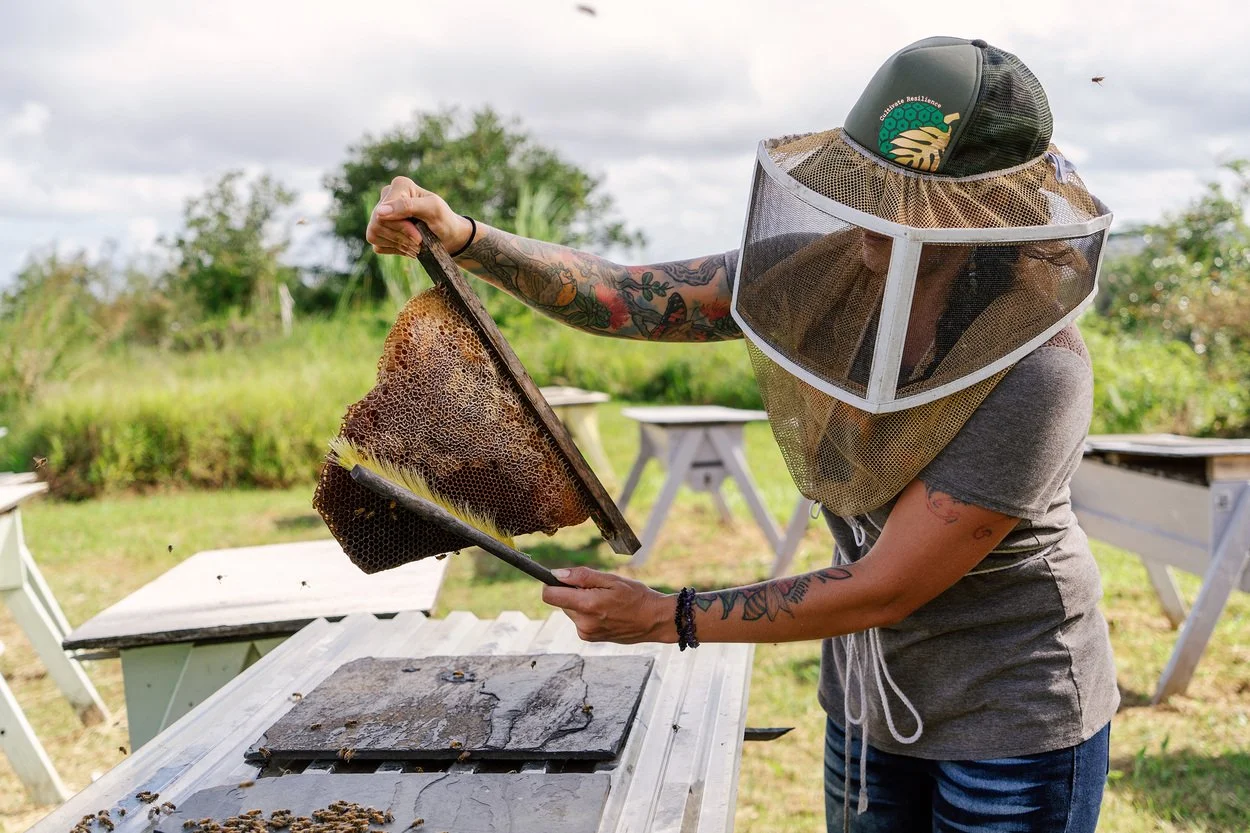
Beekeeping on the wet side of Hawaiʻi island at Rebels' Roost Farm and Apiary in Hilo.
Why we keep going
None of the above is a complaint, exactly. It's context. Farming anywhere is hard, and farming in Hilo is hard in specific ways that took us time to understand.
But the growing season never ends, the bees never stop, and we grow things here that wouldn't survive a single winter anywhere we've lived before. The land will forever be teaching us things, and it’s something special to be a part of.