Goat Milk Soap: What's Actually in It and Why It Works Differently
Most soap isn't really soap. Here's what goat milk actually does to the chemistry, why it matters for your skin, and how we make ours on a small farm in Hilo, Hawaiʻi.
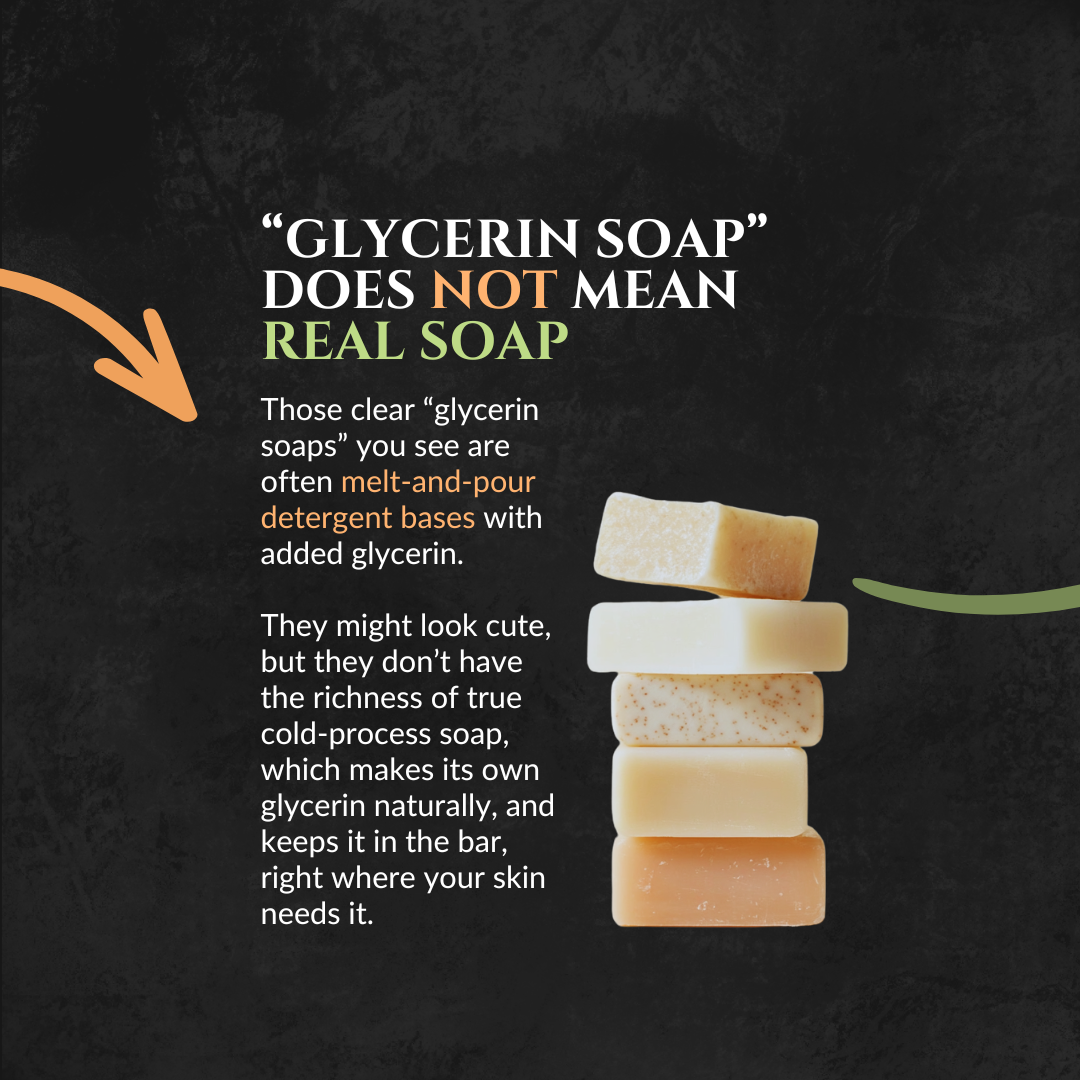
Most commercial soap bars aren’t actually soap.
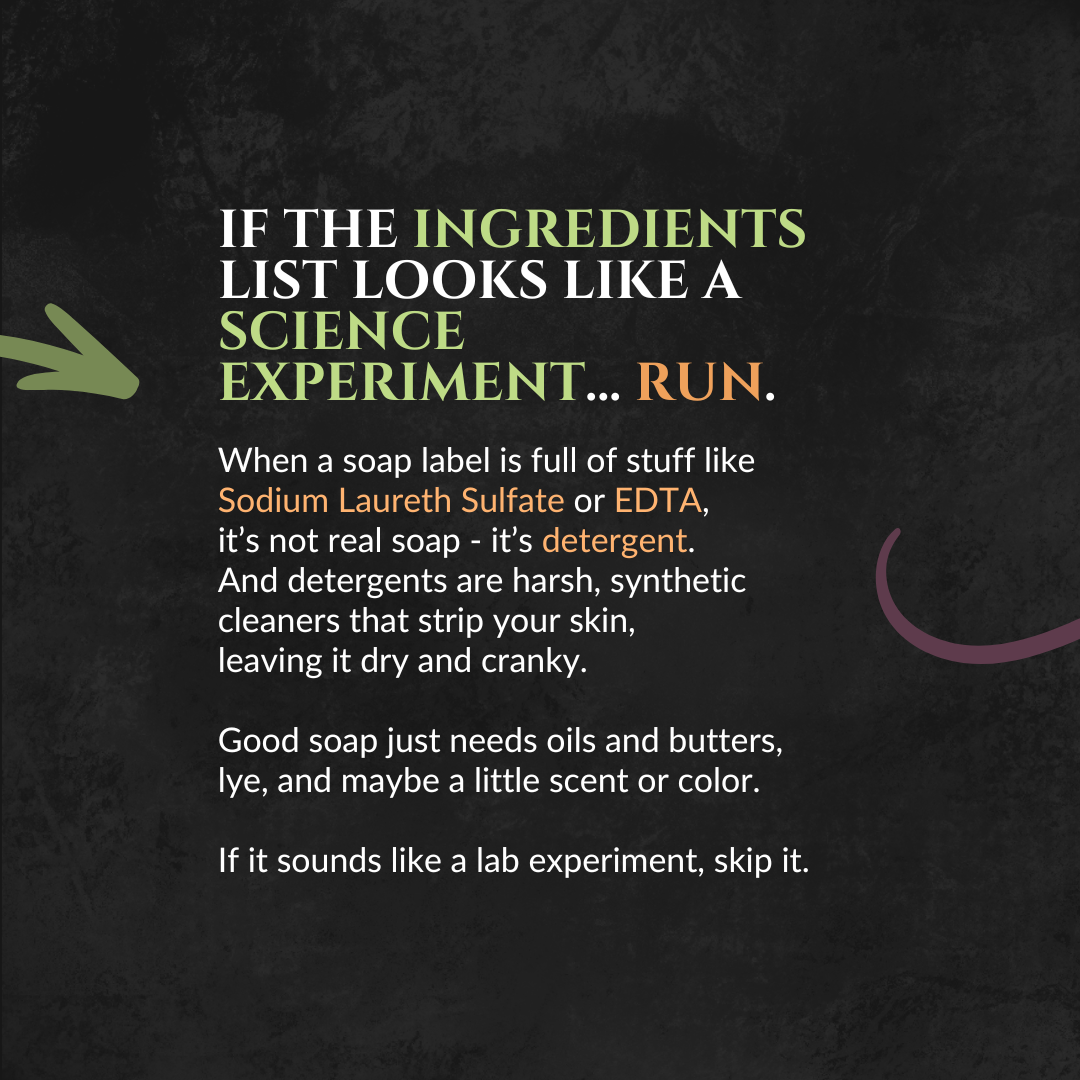
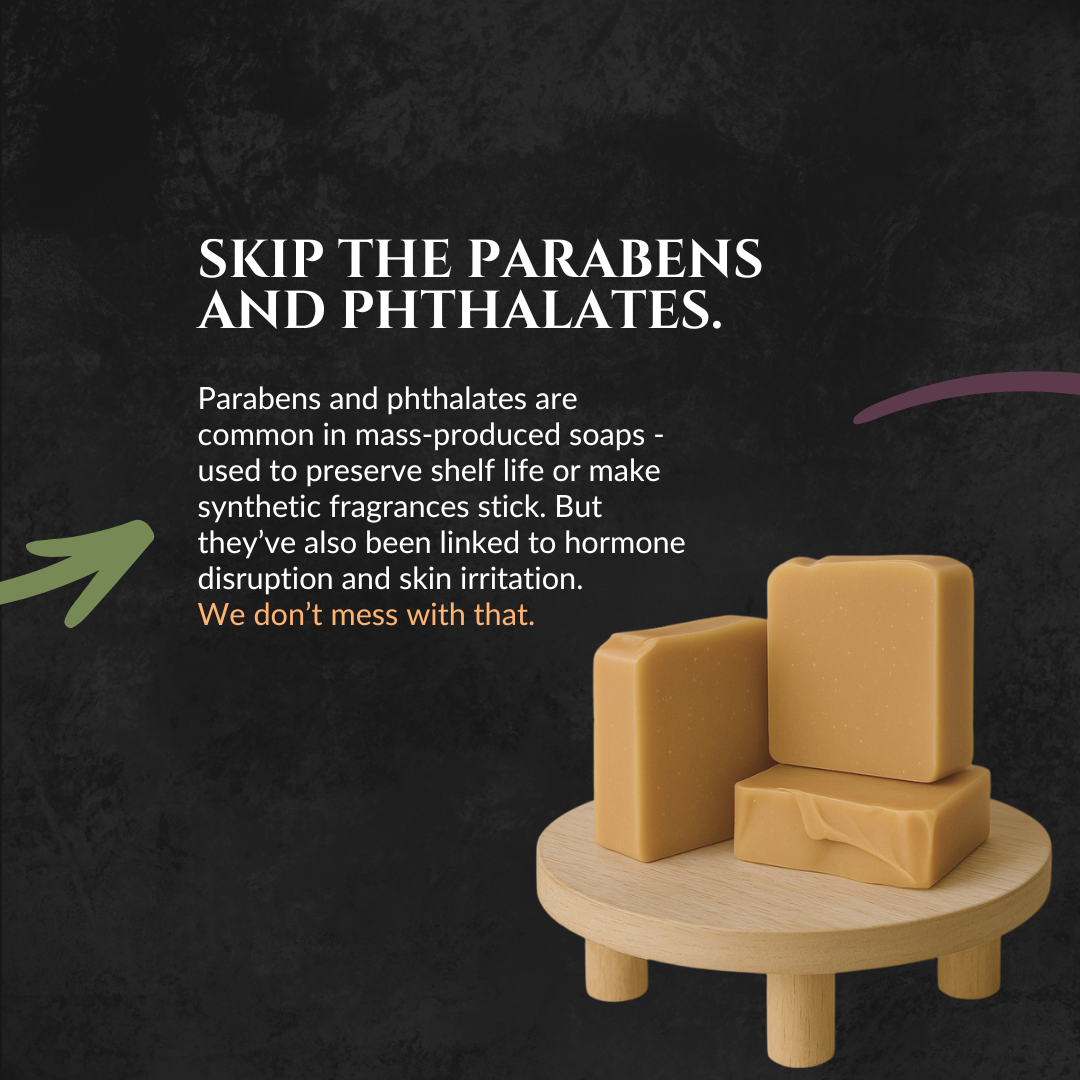
Browse the soap shelf at any grocery store and most of what you're looking at is technically a detergent. They're synthetic detergent products formulated to look and perform like soap, usually with surfactants, preservatives, and fragrance compounds that have nothing to do with what soap originally was.
Real soap is made with lye (sodium hydroxide plus water), and fats (often oils). That's it. When lye mixes with fat, the reaction consumes both and results in soap. A byproduct of that reaction is glycerin, a humectant that draws moisture to the skin. Commercial manufacturers typically extract the glycerin, because it's more valuable as an ingredient in other products that can be sold separately. You're left with a cleaner that strips well and moisturizes less.
What goat milk does to soap
In goat milk soap, you're replacing some or all of the water in the recipe with goat milk. That changes the fat content and the chemistry in ways that matter.
Goat milk is naturally high in fats, specifically those that are closer in composition to human skin's lipid profile than most plant oils. Beyond the fats, it contains lactic acid, an alpha-hydroxy acid that functions as a mild exfoliant. It also brings Vitamin A and selenium to the mix, boosting cell turnover and protecting cells from oxidative damage.
What that means in actual daily use: the creamy, dense soap later rinses cleaner, and it leaves less of that tight-skin feeling that harsh soaps cause. People with eczema, psoriasis, or sensitive skin often find goat milk soap tolerable when other soaps aren't. That's not marketing, it's the fat and acid composition doing something different at the skin barrier level.
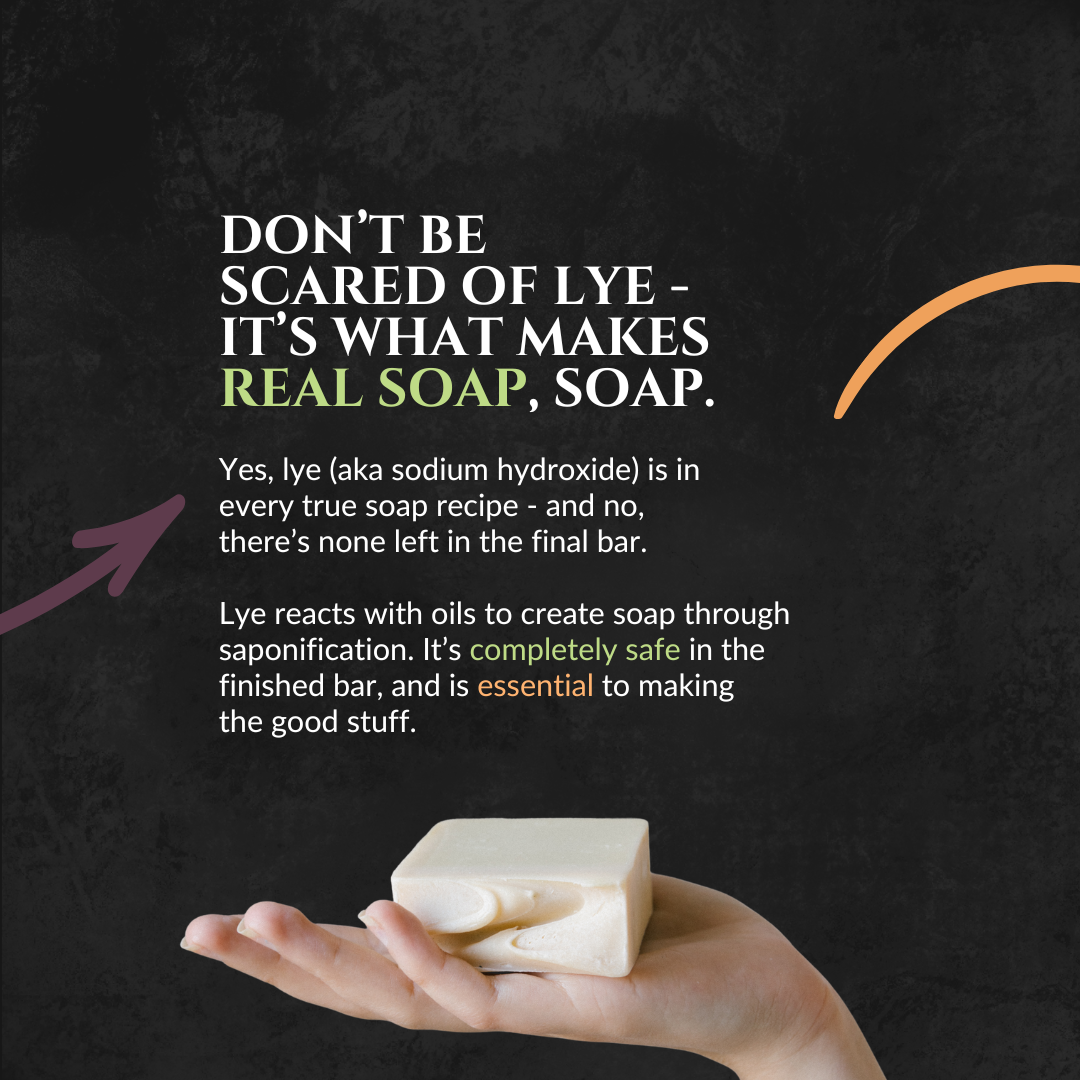
If soap is made with lye, is it safe to use?
Yes. The saponification reaction consumes the lye completely. A correctly made bar of soap contains no free lye. What's left is soap, glycerin, and any unsaponified oils the maker chose to leave in for a bit of extra conditioning. The lye is a reagent, not an ingredient that remains in the finished product.
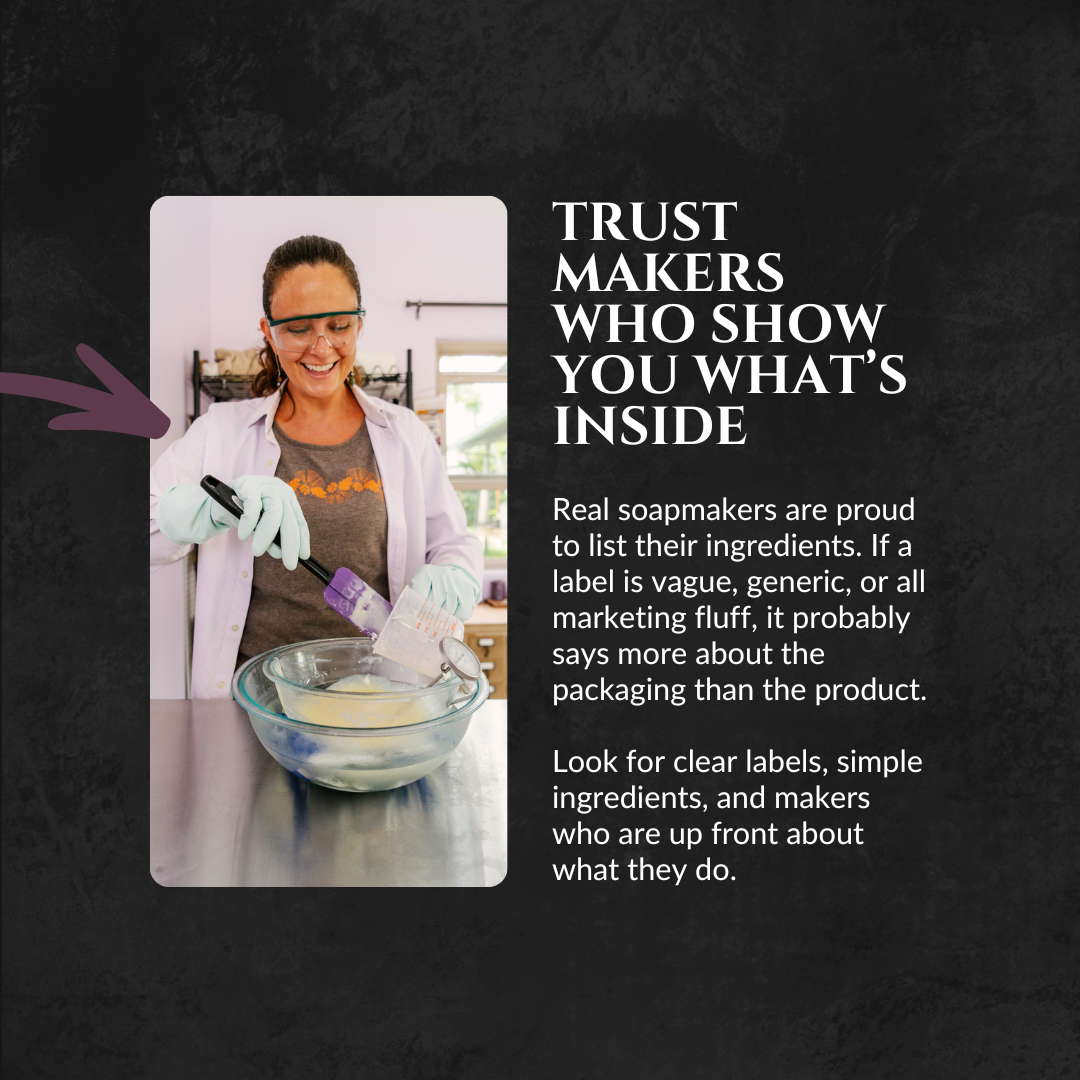
The important word is "correctly made." Miscalculated lye-to-fat ratios can leave a bar either too harsh (lye-heavy) or too soft and prone to rancidity (oil-heavy). This is why soap chemistry matters, and why cold-process handmade soap from someone who's been making it for years is a different product than a kit soap or a bar with a vague ingredient list.
How we make our goat milk soap
Our goat milk comes from the goats we milk every day on our Hilo farm. We freeze it before use. Adding frozen milk to lye slows the reaction and prevents the sugars in the milk from scorching, which would turn the batter orange and affect the finished bar.
Our base recipe is consistent from batch to batch, though it's been refined over the years as we developed a harder bar with better lather. The oil blend is chosen for fatty acid profile, lather quality, and hardness. We add kaolin clay for a silkier lather, and both citric acid and sodium lactate to improve hardness and speed the cure time. Fragrance and any additional botanicals change by variety, but the foundation stays the same.
We superfat our bars, meaning there's a small percentage of unsaponified oil left in the finished soap to condition the skin. And we cure for a minimum of four weeks after cutting, which hardens the bar, mildifies any residual harshness, and improves lather.
The result is a bar that lasts considerably longer than commercial soap because it hasn't had the glycerin stripped out.
Why we make it
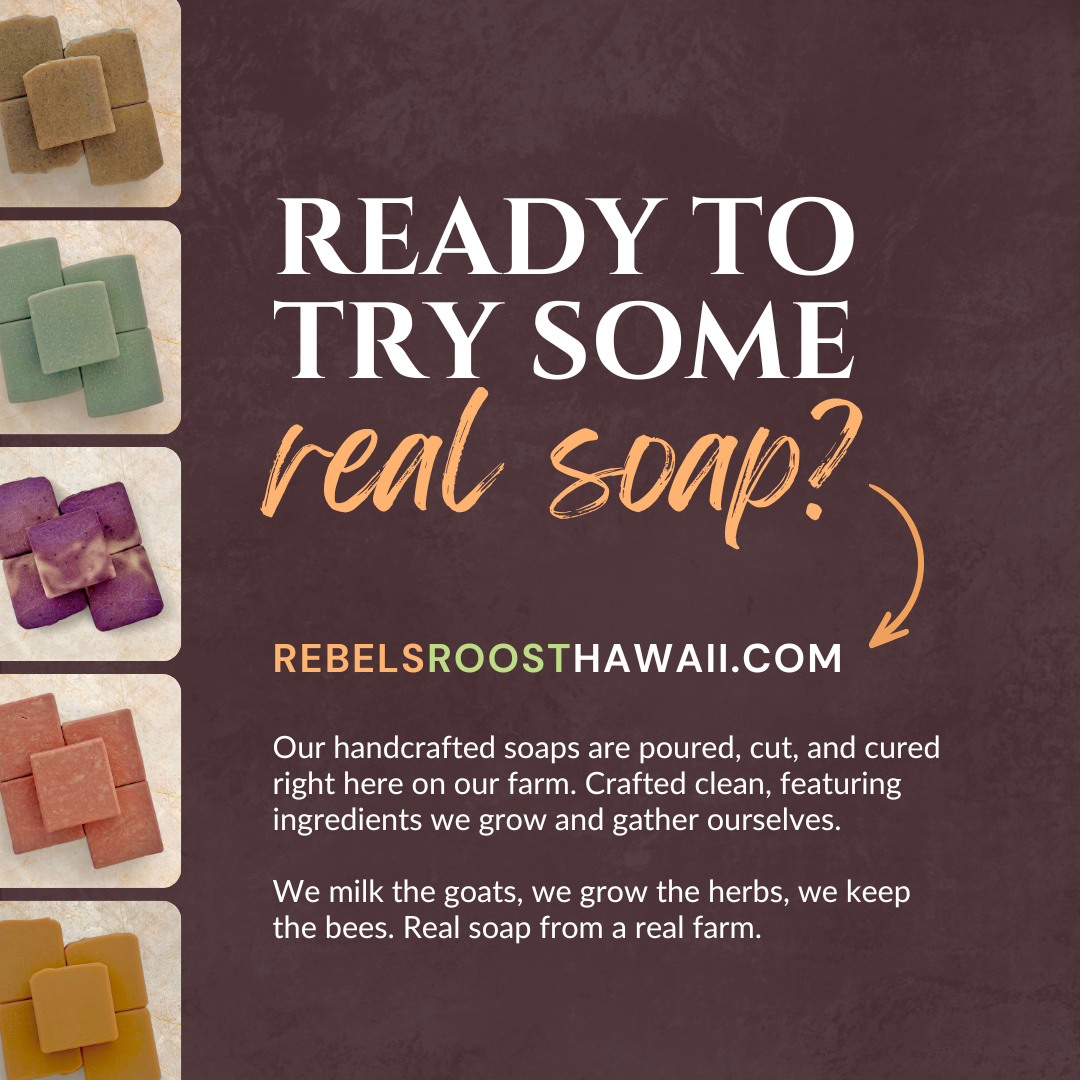
We have goats who produce more milk than the farm uses, so we make soap with it. No middlemen, nothing added that doesn't belong there. It's also the only soap our family uses. Which, after years of making it, still feels like the best endorsement we've got.
Our goat milk soaps are available in the shop as individual bars and samplers. Browse the soap →